Saturday, June 20, 2009

The abortive attack on Ploesti in June 1942

The Americans sent a group of B-24 Liberator bombers to Egypt in preparation for a raid on the oil fields at Ploesti, in Rumania. This group of bombers and their men was called the Halverson Detachment. A attack force flew from Fayid (close to the Suez Canal), taking off before dawn on 12 June 1942. The plan to form up and make a concentrated attack failed, and worse yet, the weather was cloudy when they arrived near Ploesti. They had planned a high level attack, so most bombers dropped their loads into the clouds. A few dropped below the clouds, but dropped their bombs without really aiming. The planes scattered after the attack. Four planes landed in neutral Turkey, two landed in Syria, and the rest landed in Iraq, as was the original plan. One British Liberator and the seven American planes participated in the "Vigorous" convoy action, which happened right after the attack on Ploesti. This is based on the account in Vol.III of the Official History.

Monday, June 15, 2009

Wellingtons in action in late May and early June 1942

Wellingtons, operating from airfields on Malta were active during late May and early June 1942. Malta was just starting to recover from the severe pounding and could not do much in North Africa. Wellingtons mostly operated against ports and airfields. No.205 Group flew 403 sorties from 26 May until 13 June. They mined the harbour at Benghazi (four times) and hit airfields at Tmimi, Martuba, Berka, and Derna.From 8 June, they hit Italian ports prior to the next two convoys to Malta. This is based on the account in Vol.III of the Official History.

Friday, June 12, 2009

Belhamed forward base had to be abandoned

A great deal of effort had been expended to extend the rail head to Belhammed, the forward supply base. The work was finished on 12 June 1942, as the situation near Gazala and Tobruk deteriorated. By 14 June, the order was given to removed from Belhamed. Most had been cleared by 16 June, as there was a plan in place that was executed. General Ritchie ordered the remaining petrol to be dumped on 16 June. Tobruk still had a large supply of stores, fuel, and ammunition. This is based on the account in Vol.III of the Official History.

Thursday, June 11, 2009

13 June 1942, a bad day for the British


On 13 June, Rommel planned to send the 15th Panzer Division west and the 21st Panzer Division east to "cut off Knightsbridge". He also ordered the 90th Light Division into the battle from near El Adem. In the morning, the 2nd Armoured Brigade and 22nd Armoured Brigade, with some infantry tanks from the 32nd Army Tank Brigade fought and resisted east of Knightsbridge. At 3pm in the afternoon, the attack by 21st Panzer Division on the 2nd Scots Guards, one battery of the 11th RHA, and the 6th South African Field Battery at the west end of Maabus er Rigel created a crisis. The 2nd Armoured Brigade and 4th Armoured Brigade were sent to help fight the 21st Panzer Division.


There were constant dust storms which greatly limited air action. In one case, some Kittyhawks attacked a Ju-88 formation that had a heavy escort. The result was four lost Kittyhawks.


At the end of 13 June, the British only had about fifty cruiser tanks and twenty infantry tanks remaining. They had lost possession of so much ground that there was no possibility of recovering and repairing lost tanks. As many as 417 tanks had been recovered up to this point. A full 210 had been repaired and another 122 were sent back to base workshops. Another 138 13th Corps infantry tanks were recovered during this period, as well. This left the British with little option but to withdraw from Knightsbridge, which General Gott ordered during the night of 13/14 June. This is based on the account in Vol.III of the Official History.

Thursday, June 04, 2009

The British plans for 13 June 1942

Late on 12 June 1942, General Ritchie believed that the battle would now center on the infantry divisions in the 13th Corps. He hoped to place the 1st Armoured Division under the command of 13th Corps to support them better. He was out of communication with General Lumsden, the 1st Armoured Division commander, however. General Ritchie was not able to pass orders to General Lumsden until the 13th. The British plan included the 7th Motor Brigade at El Adem to hit the Axis forces from behind. At El Adem, the 10th Indian Division was also supposed to engage the Axis forces. This is based on the account in Vol.III of the Official History.

Friday, May 29, 2009

General Ritchie starts to anticipate Rommel's moves

Later on 12 June 1942, General Ritchie learned of the British tank losses and he realized that Rommel might well decide to move north and pin the 1st South African Division and the 50th Division against the sea. General Ritchie thought that his only options were to continue the battle or withdraw to the Egyptian frontier. The latter would leave Tobruk cut off and vulnerable. General Ritchie decided that standing and fighting would be better than risking a running battle and withdrawal. General Auchinleck, who had come forward, agreed with his decision. Churchill learned of the situation and agreed that they should stand and fight. This is based on the account in Vol.III of the Official History.

Monday, May 25, 2009

12 June 1942 at Knightsbridge

British tactical communications seem to have been atrocious as the time of the Gazala battle. Conditions were hazy with a lot of dust in the air. The German anti-tank gunners used this as cover to push their guns forward. The deadly guns were the 50mm PAK38's, which had an extremely low-silhouette. They chewed up British armour on 12 June 1942, near Knightsbridge. General Lumsden, the 1st Armoured Division commander, was out of communication with his corps commander, General Norrie, so he was left to make his own decisions. General Lumsden knew that he had taken heavy losses and was in no place to go on the offensive. General Norrie, who had lost touch with the battle, still was thinking of offensive operations. General Lumsden decided to continue to hold Knightsbridge, inspite of his heavy losses. This is based on the account in Vol.III of the Official History.

Tuesday, May 19, 2009

The air battle on 11 and 12 June 1942

The British air forces saw the Axis movements north from Bir Hacheim later in the day on 11 June 1942. By the morning of 12 June, they knew that the 90th Light Division was near El Adem and commenced to attack them from the air, almost continuously. The 90th Light Division found these attacks to be non-effective and only a minor nuisance. There were about twenty low-level attacks by British aircraft during the day. The British had the air to themselves, however, on 12 June, as the Axis air forces were absent from the battle near El Adem. They were busy near Knightsbridge and Acroma. The biggest attack was a 100 plane raid at about 8pm which was intercepted by six British fighter squadrons. A huge air battle ensued. British fighters flew 583 sorties on the day. This is based on the account in Vol.III of the Official History.

Saturday, May 16, 2009

The Gazala Battle on 12 June 1942 turns against the British

The 30th Corps commander, General Norrie, decided to go on the offensive, early on 12 June 1942, since he believed that the Axis forces were dispersed. He wanted the 2nd and 4th Armoured Brigades to head south and then attack the 15th Panzer Division. The 7th Armoured Division commander, General Frank Messervy, disagreed with this move, and decided to go and talk with his corps commander in person. Near El Adem, he encountered Axis forces and was "out of touch with everyone". Since they never got the order to advance, the two armoured brigades sat and fought off a half-hearted attack by the 15th Panzer Division, which was supposed to keep a defensive posture. At noon, Rommel decided to hit the 2nd and 4th Armoured Brigades from front and rear with his two panzer divisions. Since General Norrie could not find General Messervy, he put the 7th Armoured Division brigades under the command of the 2nd Armoured Division commander, who brought forward the understrength 22nd Armoured Brigade. At this point, the 2nd and 4th Armoured Brigades were hit by the 15th Panzer Division. The 4th Armoured Brigade went over the escarpment, partly by mistake and partly because of the Axis attacks. The British had sustained heavy tank losses due to skillful use of anti-tank guns, which were pushed forward. General Norrie did not know about the losses that had been taken, and assumed that they armour was still intact. This is based on the account in Vol.III of the Official History.

Wednesday, May 13, 2009

The British tank situation on 12 June 1942

The British tank situation on 12 June 1942 was not as good as General Ritchie had believed, but they still had a fairly strong tank force:

Grants Stuarts Crusaders Infantry tanks
2nd Armoured Brigade 17 3 25

4th Armoured Brigade 39 56

22nd Armoured Brigade 27 5 34

32nd Army Tank Brigade 63

7th Motor Brigade 16
(detachment of the
2nd Royal Gloucestershire
Hussars)


The British had 83 Grants, 64 Stuarts, and 59 Crusaders, for a total of 206 cruiser tanks. They also had the 63 infantry tanks, mostly Valentines, but probably some Matildas, as well. There is a slight possibility that they could have had some A.10 Cruiser Mk.II, which had a similar speed to the Valentine. The 32nd Army Tank Brigade was the reconstituted 3rd Armoured Brigade, from early 1941. They definitely had some of the older A.9's and A.10's, if not A.13's in 1941. This list draws upon Note 1 from page 240 in Vol.III of the Official History.

Saturday, May 09, 2009

German armour on 11 June 1942

On 11 June 1942, the Axis tank strength was greatly reduced. There were 27 Pzkw IIIJ (or perhaps Pzkw IIIL), 6 Pzkw IVF2, 25 Pzkw II, 83 various models of Pzkw III, and 8 Pzkw IV tanks. There were also about 60 Italian M13/40 and M14/41 tanks. Rommel ordered the 15th Panzer Division, 90th Light Division, and Italian Trieste Motor Division to move towards El Adem. 21st Panzer Division was to show activity north from Sidra ridge. That led General Norrie to believe that he might have an opportunity to strike the Axis forces, which he thought were dispersed. This is based on the account in Vol.III of the Official History.

Tuesday, May 05, 2009

The British defences on 11 June 1942

A minefield stretched from Acroma to the sea and blocked the Axis forces to the west. Acroma, itself had its crossing held by the 2nd Scots Guards. The 29th Indian Infantry Brigade held El Adem. The 201st Guards Motor Brigade held Knightsbridge. The 2nd South African Division held the Tobruk fortress. The 1st South African and 50th Division defences at Gazala were still unbreached. The infantry defences were, therefore, relatively well positioned. The armour was in much worse shape, and to make matters worse, the strength was less than General Ritchie realized. The artillery was also greatly diminished. A full seven field artillery regiments had been lost in the battle to date. This is based on the account in Vol.III of the Official History.

Saturday, May 02, 2009

By 11 June 1942

As of 11 June 1942, the British defensive front at Gazala continued to hold, despite the Axis successes. The front was stabilized by the two divisions that were still intact: the 1st South African and the 5th Division. Besides that small units were spread across the desert in strong points with infantry, anti-tank guns, and field artillery. The anti-tank guns were in short supply, however. The infantry and especially the armour were becoming increasingly fractured. Because of the difficulties in resupplying units with tanks and soldiers, the armoured units had become mixtures composed from many different units. Worse, yet, while General Ritchie thought that on 10 June, he still had 250 cruiser tanks and 80 infantry tanks, he only had 77 Grants, 52 Crusaders, 56 Stuarts, and 63 infantry tanks. All the infantry tanks were in the 32nd Army Tank Brigade. This is based on the account in Vol.III of the Official History.

Monday, April 27, 2009

The 1st Free French Brigade Group

The 1st Free French Brigade Group were the defenders of Bir Hacheim. The brigade consisted of the following units:

2e bataillon Légion étrangère
3e bataillon Légion étrangère
2e bataillon de marche de l'Oubanghi
1er bataillon d'infanterie de marine (coloniale)
1er bataillon du Pacifique
1er regiment d'artillerie
1er bataillon de fusiliers marins (AA)
an anti-tank company, engineers, signal, medical,
signal, and administrative troops

They had 26 field guns, 62 anti-tank guns, and 44 mortars


This is from Footnote 1 on page 237 of the British Official History.

Thursday, April 23, 2009

Back to Bir Hacheim

While the Cauldron battle was being fought, the 90th Light Division and Italian Trieste division had been trying take Bir Hacheim in the south. They had good air support, although the support was very grudgingly given. Rommel had decided that Bir Hacheim needed to be taken by 8 June 1942 so that they could return to the task of attacking the Gazala line from the rear. To bolster the attack, Rommel sent the 15th Panzer Division south to join the battle. British columns operated outside the Bir Hacheim perimeter. They were formed from the 7th Motor Brigade, the 29th Indian Infantry Brigade, and the Free French. By 8 June, the air attacks had increased in intensity. 58 bombers escorted by 54 fighters were used in the attacks. The Free French needed help, but the army was not able to immediately help. Instead, the RAF mounted 478 sorties on 8 June against the Axis forces attacking Bir Hacheim. On 9 June, the British air effort was greatly diminshed. General Ritchie decided early on 10 June that the French needed to withdraw from Bir Hacheim,as they could not be sustained in that position. Rommel personally led a DAK attack that broke into Bir Hacheim from the north. The 7th Motor Brigade arrived with a large motor convoy and embarked 2700 men from the original 3600 and took them away successfully. This is based on the account in Vol.III of the Official History.

Sunday, April 19, 2009

Defeat in the Cauldron

The British attempt to destroy the Axis forces in the Cauldron was a failure. The Axis forces admired the "courage and self-sacrifice" of the British soldiers, but that was not enough to overcome the command problems that existed. Rommel seems to have been successful in allowing the British to attack and be defeated. The best of the British tactics, artillery concentration and infantry attacking at night, were not enough. Once the battle was underway, the British had lost control of the action while Rommel personally commanded the battle as it progressed. But the battle for the Cauldron was over and the focus would shift to Bir Hacheim. This is based on the account in Vol.III of the Official History.

Wednesday, April 15, 2009

The Hurricane IID arrives in the desert
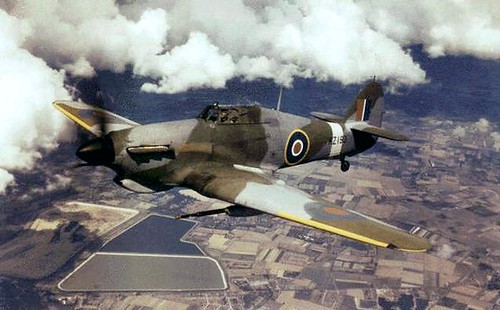


About this time, 6 June 1942, the first Hurricane IID aircraft arrived in the Desert. No.6 Squadron had nine when the squadron started operations. Their 40mm cannon seemed too large for the Hurricane. Because of the weight of the guns, the Hurricanes were stripped to reduce weight. With the guns, with 15 rounds each, they were still very overweight. Still, they could destroy Axis tanks with hits to the thin upper armour.

Sunday, April 12, 2009

"The Cauldron" lost on 6 June 1942

For some reason, the RAF was not able to effectively intervene in the battle for the Cauldron on 6 June 1942 when infantry and artillery was attacked by the Axis forces. The RAF frequently turned down requests for support during the day. This was at point B180, which was south-southwest of Knightsbridge. There were a Gurkha battalion and two Indian battalions, along with the 50th Reconnaissance Battalion and three RA Field Regiments and one RHA regiment. The Royal Artillery fought to the death, killed at their guns. A very few infantrymen escaped to the east. 7th Armoured Division was not able to intervene, despite having the 2nd and 4th Armoured Brigades. The usual problem occurred. Rommel knew what was happening, while the British commanders had lost touch with the the battle. They were not able to follow events as they happened. This is based on the account in Vol.III of the Official History.

Sunday, April 05, 2009

Chaos erupts: the divisional headquarters are overrun or dispersed

The Official History does a poor job of mentioning the date when events happen. Apparently, still on the afternoon of 5 June 1942, Rommel decided to go on the offensive with his mobile forces. The Ariete Division and the 21st Panzer Division attacked to the East and the 15th Panzer Division attacked north towards Knightsbridge. The 9th Indian Division and 7th Armoured Division headquarters were scattered by these attacks. Whatever control was being asserted over the constituent units was lost. The 5th Indian Division HQ was at El Adem. The 22nd Armoured Brigade was hit by the 15th Panzer Division. What made the situation worse was that General Ritchie, the army commander, had no real idea that the situation and gone so badly wrong. This is based on the account in Vol.III of the Official History.

Wednesday, April 01, 2009

No one in command

As the situation worsened, it was every division for its self. The 7th Armoured Division and 5th Indian Division commanders both recognized that they had serious problems, but there was no corps commander between them and the army commander. The army commander was oblivious, so the divisions continued to commit their forces piecemeal, where they were defeated individually. The 2nd Armoured Brigade group was this skeleton organization with one tank regiment, one motor battalion, and one RHA regimentIt was sent off on its own towards a point to the south of Knightsbridge. At this point, on 5 June 1942, Rommel was formulating his plan of action, given the developing situation. This is based on the account in Vol.III of the Official History.

Amazon Ad