Friday, February 26, 2010
The opening act of Vigorous

Wednesday, February 24, 2010
The Situation at Malta
Monday, February 22, 2010
The forces for "Pedestal"
Victorious: 16 Fulmars, 6 Hurricanes, and 14 Albacores
Indomitable: 10 F4F Martlets, 24 Hurricanes, and 14 Albacores
Eagle: 16 Hurricanes
This is based on the account in Vol.III of the Official History
Wednesday, February 17, 2010
More of the war at sea in late June and July 1942
Monday, February 15, 2010
Other events in June 1942
Friday, February 12, 2010
Malta resurgent in July 1942
Tuesday, February 09, 2010
The failure of the June 1942 convoys
Friday, February 05, 2010
The Vigorous convoy returns to Alexandria
Tuesday, February 02, 2010
Early on 15 June 1942: the Vigorous convoy
Saturday, January 30, 2010
The Italian fleet menaces the Vigorous convoy
Tuesday, January 26, 2010
14 June 1942: the Vigorous Convoy
During the day on 14 June 1942, the Vigorous Convoy was in range of shored-based fighter cover. Late in the afternoon, they passed out of range so that only long-range Kittyhawks and Beaufighters were providing cover. Between 4:30pm and 9:15pm, seven different air attacks were mounted by Ju-87's and Ju-88's. At about 6pm, the merchant ship Bhutan was hit and sunk. The merchant ship Potaro was damaged but stayed with the convoy. As the sun set, the destroyer Pakenham had a near miss from a submarine-fired torpedo. A little while later, six motor torpedo boats were seen. After sunset, aircraft dropped flares to help the submarines and torpedo boats.
Earlier on 14 June, the main Italian fleet sortied from Taranto, intending to attack the convoy. The fleet was substantial: two battleships, 2-8-inch gun cruisers, 2-6-in gun cruisers, and 12 destroyers. They were on course to intercept the convoy at 9am on 15 June. This is based on the account in Vol.III of the Official History.
Monday, January 25, 2010
The Decoy Convoy
Thursday, January 21, 2010
Allied air power in support of the Vigorous convoy
Monday, January 18, 2010
The Vigorous convoy: June 1942
Saturday, January 16, 2010
The Harpoon Convoy arrives at Malta
Wednesday, January 13, 2010
More British ships lost
Saturday, January 09, 2010
The Harpoon convoy loses two ships
Thursday, January 07, 2010
15 June 1942: a desperate fight
Sunday, January 03, 2010
The Harpoon convoy runs towards Malta
Thursday, December 31, 2009
More air fighting over Harpoon on 14 June 1942
Monday, December 28, 2009
The first air attack on the Harpoon Convoy: 14 June 1942
Sunday, December 27, 2009
The Harpoon Convoy Ships
Tuesday, December 22, 2009
The Harpoon convoy sails
Saturday, December 19, 2009
Air forces to support the Harpoon and Vigorous convoys
                      Malta                   Egypt
Albacore              No.830 (FAA)           Nos. 821 and 826 (FAA)
Baltimore             No.69
Beaufort              No.217                 No.39
Blenheim                                     Nos.203 and 13 (Hellenic)
Hudson                                       No.459 (RAAF)
Maryland                                     No.203
Spitfire              No.2 PRU
Sunderland                                   No.230
Swordfish (A.S.V.)                           No.815 (A.S.V.)
Wellesley                                    No.47
Wellington (torpedo) No.38
Wellington (A.S.V.)  No.221 (Detachment)     No.221

There were also 95 Spitfire fighters on Malta after 9 June 1942
divided between Nos.126, 185, 249, and detachments from Nos.601 and 603 squadrons.
There were also night fighter Beaufighters in No.1435 Flight
and a No.235 Squadron detachment from the U.K.
As we indicated, this is based on the notes in Vol.III of the Official History.
Thursday, December 17, 2009
The irony of Malta and June 1942
Saturday, December 12, 2009
The situation right before the 1st Battle of El Alamein
Friday, December 11, 2009
Action in the air from 29 June 1942
Wednesday, December 09, 2009
The 10th Corps Plans breaks out
Tuesday, December 01, 2009
General Gott orders the withdrawal on 27 June 1942
General "Strafer" Gott was the 13th Corps commander in the Eighth Army. At 7:20pm on 27 June 1942, General Gott issued the pre-arranged code word to his units telling them to start the withdrawal from the Mersa Matruh vicinity. He reported the news to Eighth Army headquarters which promptly issued a similar code word to 10th Corps.
Brigadier Inglis decide to use his best unit, the 4th NZ Infantry Brigade, to lead the breakout. The rest of the New Zealand Division would follow. As luck would have it, Brigadier Inglis took the division headquarters and the 5th NZ Brigade on a separate route that took them into the 21st Panzer Division leaguer, causing chaos. The New Zealand Division headed east to their rendezvous, reaching it on 28 June. This is based on the account in Vol.III of the Official History.
Sunday, November 29, 2009
The situation at Mersa Matruh deteriorates
Thursday, November 19, 2009
The British armour threw the Germans on the defensive: after 4pm on 27 June 1942
Wednesday, November 18, 2009
By 27 June 1942, the Axis forces were stretched thin
Saturday, November 14, 2009
27 June 1942 at Mersa Matruh
Tuesday, November 10, 2009
The Axis forces attack on 26 June 1942
Sunday, November 08, 2009
Auchinleck assumes command
Friday, November 06, 2009
The plan to defend Mersa Matruh
Tuesday, November 03, 2009
Where was the Luftwaffe?
Thursday, October 29, 2009
The 8th Army withdraws from the Egyptian border
Wednesday, October 28, 2009
The Desert Air Force
Fighters
11 Hurricane squadrons
6 Kitty Hawk squadrons
1 Spitfire squadron
2 Tomahawk squadrons
2 Beaufighter squadrons

Tactical Reconnaissance
1 Hurricane squadron
1 Tomahawk squadron

Light Bombers
2 Boston squadrons
1 Blenheim squadron
1 Baltimore squadron
The Desert Air Force had 463 aircraft on 22 June 1942, with another 420 distributed across the Middle East. This is based on the account in Vol.III of the Official History.
Sunday, October 25, 2009
American reinforcements to the Middle East
One squadron of 27 Lockheed Hudsons
One group of 80 Curtis Kittyhawks
One group of 57 North American B-25 Mitchells
One group of 35 Consolidated B-24 Liberators
This is based on the account in Vol.III of the Official History.
Tuesday, October 20, 2009
The air force takes the load
Thursday, October 15, 2009
The First Plan
Tuesday, October 13, 2009
The Frontier, Mersa Matruh, or El Alamein?
The question of the moment on 23 June 1942 was where to fight to stop Rommel. The Defence Committee in London would have liked to see a stand made at the Frontier. For a number of reasons, this was appealing. First, it would keep Axis forces further away from Alexandria and the Nile Delta. Secondly, Allied Air Forces would be better able to protect convoys to Malta and to interdict Axis supply lines.
In the Middle East, the commanders thought that they lacked sufficient mobile forces, especially armour, to risk a fight at the frontier. Mersa Matruh was another 120 miles East of the Frontier. They calculated that there would be that much more strain on Axis supply lines by fighting at Matruh. The problem with fighting at Mersa Matruh was that there still was a lack of mobile forces and defending Mersa Matruh without them was problematic. This is based on the account in Vol.III of the Official History.
Tuesday, October 06, 2009
The British plans from 21 June 1942
Saturday, October 03, 2009
Axis plans on 26 June 1942
Tuesday, September 29, 2009
The situation after Tobruk fell
Thursday, September 24, 2009
After Tobruk's capture
Sunday, September 20, 2009
The Fall of Tobruk
The Official History estimates that 33,000 men were taken prisoner at Tobruk, when the fortress was surrendered. The German casualties in the campaign to capture Tobruk were about 3,360 men killed. South Africa lost about one-third of their men in North Africa was prisoners. The German practice of officers leading in combat led to high casualties (perhaps as much as 70% in the motorized infantry and armoured units).
The main reason that the fortress fell was that a decision had been made as far back as February 1942 not to allow Tobruk to be besieged again. Because of that, the defenses were in poor condition. On top of that, the 2nd South African Division was not suited to defend the place, as the commander and men lacked the necessary experience.
With the surrender of Tobruk, Rommel was promoted to Field-Marshal. He expected to be able to blitz all the way to the Suez canal. This is based on the account in Vol.III of the Official History.
Tuesday, September 15, 2009
Tobruk falls
Sunday, September 13, 2009
The attack on Tobruk, underway
Tuesday, September 08, 2009
The attack on Tobruk started on 20 June 1942
Saturday, September 05, 2009
Rommel's attack plans
Tuesday, September 01, 2009
Preparations at Tobruk in mid-June 1942
Saturday, August 29, 2009
Artillery at Tobruk in mid-June 1942
Monday, August 24, 2009
The fortifications at Tobruk in June 1942
Thursday, August 20, 2009
The 20 June 1942 assessment
Sunday, August 16, 2009
Tobruk loses air support
Thursday, August 13, 2009
The British plan on 18 and 19 June 1942
Tuesday, August 11, 2009
Tobruk surrounded: 18 June 1942
Sunday, August 09, 2009
the 20th Indian Brigade tries to withdraw
Wednesday, August 05, 2009
The 4th Armoured Brigade on 17 June 1942
Sunday, August 02, 2009
16 and 17 June 1942
Wednesday, July 29, 2009
The airfields at Gambut
Sunday, July 26, 2009
Air operations were intense on 15 June 1942
Thursday, July 23, 2009
Withdrawal from El Adem
Sunday, July 19, 2009
El Adem on 15 and 16 June 1942
Thursday, July 16, 2009
Axis plans
Friday, July 10, 2009
14 and 15 June 1942
Monday, July 06, 2009
Backup to the night of 13/14 June 1942
Wednesday, July 01, 2009
General Ritchie had no confidence that he could make Auchinleck's plan work
General Ritchie was concerned about the losses they would take if he ordered the Tobruk garrison to fight its way out to the east. He thought that the prospects were better to simply withdraw more forces into the Tobruk fortress and hold it under siege. The problem was that General Auchinleck was opposed to that course of action, although that was what Churchill expected them to do.
Churchill opposed abandoning Tobruk, as Auchinleck was prepared to do. He had seen the ability of troops in the fortress to resist assault and thought that they could do the same thing again. Auchinleck still wanted to hold a line west of Tobruk and fight there, outside of Tobruk. Auchinleck, in the face of questions from the Prime Minister accepted that Tobruk might be surrounded, if only temporarily. This is based on the account in Vol.III of the Official History.
Monday, June 29, 2009
More from 14 June 1942
Thursday, June 25, 2009
A disconnect between commanders
Monday, June 22, 2009
14 June 1942: the British had lost the battle
Saturday, June 20, 2009
The abortive attack on Ploesti in June 1942
Monday, June 15, 2009
Wellingtons in action in late May and early June 1942
Friday, June 12, 2009
Belhamed forward base had to be abandoned
Thursday, June 11, 2009
13 June 1942, a bad day for the British
On 13 June, Rommel planned to send the 15th Panzer Division west and the 21st Panzer Division east to "cut off Knightsbridge". He also ordered the 90th Light Division into the battle from near El Adem. In the morning, the 2nd Armoured Brigade and 22nd Armoured Brigade, with some infantry tanks from the 32nd Army Tank Brigade fought and resisted east of Knightsbridge. At 3pm in the afternoon, the attack by 21st Panzer Division on the 2nd Scots Guards, one battery of the 11th RHA, and the 6th South African Field Battery at the west end of Maabus er Rigel created a crisis. The 2nd Armoured Brigade and 4th Armoured Brigade were sent to help fight the 21st Panzer Division.
There were constant dust storms which greatly limited air action. In one case, some Kittyhawks attacked a Ju-88 formation that had a heavy escort. The result was four lost Kittyhawks.
At the end of 13 June, the British only had about fifty cruiser tanks and twenty infantry tanks remaining. They had lost possession of so much ground that there was no possibility of recovering and repairing lost tanks. As many as 417 tanks had been recovered up to this point. A full 210 had been repaired and another 122 were sent back to base workshops. Another 138 13th Corps infantry tanks were recovered during this period, as well. This left the British with little option but to withdraw from Knightsbridge, which General Gott ordered during the night of 13/14 June. This is based on the account in Vol.III of the Official History.
Thursday, June 04, 2009
The British plans for 13 June 1942
Friday, May 29, 2009
General Ritchie starts to anticipate Rommel's moves
Monday, May 25, 2009
12 June 1942 at Knightsbridge
Tuesday, May 19, 2009
The air battle on 11 and 12 June 1942
Saturday, May 16, 2009
The Gazala Battle on 12 June 1942 turns against the British
Wednesday, May 13, 2009
The British tank situation on 12 June 1942
                              Grants    Stuarts     Crusaders    Infantry tanks
2nd Armoured Brigade           17          3         25

4th Armoured Brigade           39         56

22nd Armoured Brigade          27          5         34

32nd Army Tank Brigade                                             63

7th Motor Brigade                         16
(detachment of the
 2nd Royal Gloucestershire
   Hussars)
The British had 83 Grants, 64 Stuarts, and 59 Crusaders, for a total of 206 cruiser tanks. They also had the 63 infantry tanks, mostly Valentines, but probably some Matildas, as well. There is a slight possibility that they could have had some A.10 Cruiser Mk.II, which had a similar speed to the Valentine. The 32nd Army Tank Brigade was the reconstituted 3rd Armoured Brigade, from early 1941. They definitely had some of the older A.9's and A.10's, if not A.13's in 1941. This list draws upon Note 1 from page 240 in Vol.III of the Official History.
Saturday, May 09, 2009
German armour on 11 June 1942
Tuesday, May 05, 2009
The British defences on 11 June 1942
Saturday, May 02, 2009
By 11 June 1942
Monday, April 27, 2009
The 1st Free French Brigade Group
2e bataillon Légion étrangère
3e bataillon Légion étrangère
2e bataillon de marche de l'Oubanghi
1er bataillon d'infanterie de marine (coloniale)
1er bataillon du Pacifique
1er regiment d'artillerie
1er bataillon de fusiliers marins (AA)
an anti-tank company, engineers, signal, medical,
signal, and administrative troops

They had 26 field guns, 62 anti-tank guns, and 44 mortars
This is from Footnote 1 on page 237 of the British Official History.
Thursday, April 23, 2009
Back to Bir Hacheim
Sunday, April 19, 2009
Defeat in the Cauldron
Wednesday, April 15, 2009
The Hurricane IID arrives in the desert
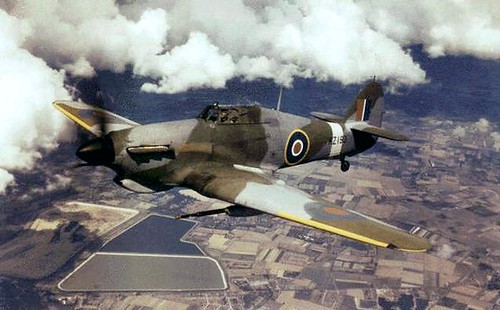
About this time, 6 June 1942, the first Hurricane IID aircraft arrived in the Desert. No.6 Squadron had nine when the squadron started operations. Their 40mm cannon seemed too large for the Hurricane. Because of the weight of the guns, the Hurricanes were stripped to reduce weight. With the guns, with 15 rounds each, they were still very overweight. Still, they could destroy Axis tanks with hits to the thin upper armour.
Sunday, April 12, 2009
"The Cauldron" lost on 6 June 1942
Sunday, April 05, 2009
Chaos erupts: the divisional headquarters are overrun or dispersed
Wednesday, April 01, 2009
No one in command
Sunday, March 29, 2009
the Gazala Battle turns against the British on 5 June 1942
Monday, March 23, 2009
The flawed command structure
Saturday, March 21, 2009
Auchinleck's plan
Thursday, March 19, 2009
Other moves on 2 June 1942
Friday, March 13, 2009
The fight for Bir Hacheim, starting 2 June 1942
British and Commonwealth ground forces were active, but mostly with Jock columns operating on the German supply lines that cut through the minefields at Trigh Capuzzo and the Trigh el Abd. Columns were drawn from the 1st South African Division, the 50th Division, and the 7th Motor Brigade. The one brigade-size attack was made by the 1st South African Brigade against the Trento Division. This is based on the account in Vol.III of the Official History.
Friday, March 06, 2009
Bir Hacheim
Rommel was in a somewhat more secure position by 2 June 1942. After taking the Sidi Muftah area, he intended to attack Bir Hacheim with some of his better infantry: the 90th Light Division and the Italian Trieste Division (motorized). The Official History notes that by this phase of the battle, Rommel had lost General Gause and Colonel Westphal to wounds.
Since 30 May, the British had been very active in the air, but by 2 June, they had taken many losses and had to stop low level attacks on Axis ground forces due to the dwindling stocks of Kittyhawks. The British had lost 50 aircraft in the first 5 days of the battle. The only good sign was the arrival of the first Spitfires in the fighter role. The plan was to use them to fly high cover for Hurricanes used as fighter-bombers. This is based on the account in Vol.III of the Official History.