Tuesday, May 05, 2009

The British defences on 11 June 1942

A minefield stretched from Acroma to the sea and blocked the Axis forces to the west. Acroma, itself had its crossing held by the 2nd Scots Guards. The 29th Indian Infantry Brigade held El Adem. The 201st Guards Motor Brigade held Knightsbridge. The 2nd South African Division held the Tobruk fortress. The 1st South African and 50th Division defences at Gazala were still unbreached. The infantry defences were, therefore, relatively well positioned. The armour was in much worse shape, and to make matters worse, the strength was less than General Ritchie realized. The artillery was also greatly diminished. A full seven field artillery regiments had been lost in the battle to date. This is based on the account in Vol.III of the Official History.

Saturday, May 02, 2009

By 11 June 1942

As of 11 June 1942, the British defensive front at Gazala continued to hold, despite the Axis successes. The front was stabilized by the two divisions that were still intact: the 1st South African and the 5th Division. Besides that small units were spread across the desert in strong points with infantry, anti-tank guns, and field artillery. The anti-tank guns were in short supply, however. The infantry and especially the armour were becoming increasingly fractured. Because of the difficulties in resupplying units with tanks and soldiers, the armoured units had become mixtures composed from many different units. Worse, yet, while General Ritchie thought that on 10 June, he still had 250 cruiser tanks and 80 infantry tanks, he only had 77 Grants, 52 Crusaders, 56 Stuarts, and 63 infantry tanks. All the infantry tanks were in the 32nd Army Tank Brigade. This is based on the account in Vol.III of the Official History.

Monday, April 27, 2009

The 1st Free French Brigade Group

The 1st Free French Brigade Group were the defenders of Bir Hacheim. The brigade consisted of the following units:

2e bataillon Légion étrangère
3e bataillon Légion étrangère
2e bataillon de marche de l'Oubanghi
1er bataillon d'infanterie de marine (coloniale)
1er bataillon du Pacifique
1er regiment d'artillerie
1er bataillon de fusiliers marins (AA)
an anti-tank company, engineers, signal, medical,
signal, and administrative troops

They had 26 field guns, 62 anti-tank guns, and 44 mortars


This is from Footnote 1 on page 237 of the British Official History.

Thursday, April 23, 2009

Back to Bir Hacheim

While the Cauldron battle was being fought, the 90th Light Division and Italian Trieste division had been trying take Bir Hacheim in the south. They had good air support, although the support was very grudgingly given. Rommel had decided that Bir Hacheim needed to be taken by 8 June 1942 so that they could return to the task of attacking the Gazala line from the rear. To bolster the attack, Rommel sent the 15th Panzer Division south to join the battle. British columns operated outside the Bir Hacheim perimeter. They were formed from the 7th Motor Brigade, the 29th Indian Infantry Brigade, and the Free French. By 8 June, the air attacks had increased in intensity. 58 bombers escorted by 54 fighters were used in the attacks. The Free French needed help, but the army was not able to immediately help. Instead, the RAF mounted 478 sorties on 8 June against the Axis forces attacking Bir Hacheim. On 9 June, the British air effort was greatly diminshed. General Ritchie decided early on 10 June that the French needed to withdraw from Bir Hacheim,as they could not be sustained in that position. Rommel personally led a DAK attack that broke into Bir Hacheim from the north. The 7th Motor Brigade arrived with a large motor convoy and embarked 2700 men from the original 3600 and took them away successfully. This is based on the account in Vol.III of the Official History.

Sunday, April 19, 2009

Defeat in the Cauldron

The British attempt to destroy the Axis forces in the Cauldron was a failure. The Axis forces admired the "courage and self-sacrifice" of the British soldiers, but that was not enough to overcome the command problems that existed. Rommel seems to have been successful in allowing the British to attack and be defeated. The best of the British tactics, artillery concentration and infantry attacking at night, were not enough. Once the battle was underway, the British had lost control of the action while Rommel personally commanded the battle as it progressed. But the battle for the Cauldron was over and the focus would shift to Bir Hacheim. This is based on the account in Vol.III of the Official History.

Wednesday, April 15, 2009

The Hurricane IID arrives in the desert
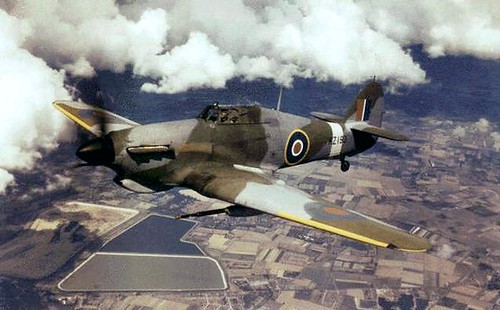


About this time, 6 June 1942, the first Hurricane IID aircraft arrived in the Desert. No.6 Squadron had nine when the squadron started operations. Their 40mm cannon seemed too large for the Hurricane. Because of the weight of the guns, the Hurricanes were stripped to reduce weight. With the guns, with 15 rounds each, they were still very overweight. Still, they could destroy Axis tanks with hits to the thin upper armour.

Sunday, April 12, 2009

"The Cauldron" lost on 6 June 1942

For some reason, the RAF was not able to effectively intervene in the battle for the Cauldron on 6 June 1942 when infantry and artillery was attacked by the Axis forces. The RAF frequently turned down requests for support during the day. This was at point B180, which was south-southwest of Knightsbridge. There were a Gurkha battalion and two Indian battalions, along with the 50th Reconnaissance Battalion and three RA Field Regiments and one RHA regiment. The Royal Artillery fought to the death, killed at their guns. A very few infantrymen escaped to the east. 7th Armoured Division was not able to intervene, despite having the 2nd and 4th Armoured Brigades. The usual problem occurred. Rommel knew what was happening, while the British commanders had lost touch with the the battle. They were not able to follow events as they happened. This is based on the account in Vol.III of the Official History.

Sunday, April 05, 2009

Chaos erupts: the divisional headquarters are overrun or dispersed

The Official History does a poor job of mentioning the date when events happen. Apparently, still on the afternoon of 5 June 1942, Rommel decided to go on the offensive with his mobile forces. The Ariete Division and the 21st Panzer Division attacked to the East and the 15th Panzer Division attacked north towards Knightsbridge. The 9th Indian Division and 7th Armoured Division headquarters were scattered by these attacks. Whatever control was being asserted over the constituent units was lost. The 5th Indian Division HQ was at El Adem. The 22nd Armoured Brigade was hit by the 15th Panzer Division. What made the situation worse was that General Ritchie, the army commander, had no real idea that the situation and gone so badly wrong. This is based on the account in Vol.III of the Official History.

Wednesday, April 01, 2009

No one in command

As the situation worsened, it was every division for its self. The 7th Armoured Division and 5th Indian Division commanders both recognized that they had serious problems, but there was no corps commander between them and the army commander. The army commander was oblivious, so the divisions continued to commit their forces piecemeal, where they were defeated individually. The 2nd Armoured Brigade group was this skeleton organization with one tank regiment, one motor battalion, and one RHA regimentIt was sent off on its own towards a point to the south of Knightsbridge. At this point, on 5 June 1942, Rommel was formulating his plan of action, given the developing situation. This is based on the account in Vol.III of the Official History.

Sunday, March 29, 2009

the Gazala Battle turns against the British on 5 June 1942

Initially, the battle on 5 June 1942 favoured the British. Early in the morning, the battle turned and the Germans, particularly, had the advantage. The initial British thrust in the early morning dark succeeded only because the attacking forces stopped short of the main Axis force. The 22nd Armoured Brigade had a strength, before the fight, of 156 tanks. They were a mixture of Grants, Stuarts, and Crusaders. They quickly ran into heavy artillery fire and turned north. They left the infantry unsupported when they were struck by German tanks. The 2nd Highland Light Infantry were driven backwards onto the Gurkhas. The same sort of thing happened to the 2nd West Yorkshires. The British fought dispersed, without support and could be beaten in detail. The 32nd Army Tank Brigade had started their attack on the Sidra ridge with 70 infantry tanks and lost 50 before the attack was canceled. This is based on the account in Vol.III of the Official History.

Monday, March 23, 2009

The flawed command structure

The planned attack on the Cauldron was to be mounted with no single officer in command. Instead, there were these independent units involved, but operating on their own. The plan sounds like another typical 8th Army operations, with the forces sent off in all directions, acting alone. The 10th Indian Brigade would attack to the west. The 32nd Army Tank Brigade would attack south and take the Sidra Ridge. Following those movements, timed to happen sequentially, the 7th Armoured Division and 9th Indian Brigade would attack west into the Cauldron. Why could they have not been more concentrated and moved together? This was all to commence on 5 June 1942. This is based on the account in Vol.III of the Official History.

Saturday, March 21, 2009

Auchinleck's plan

By 2 June 1942, General Auchinleck wanted to mount an attack towards Bir el Temrad from the XIII Corps front. He was the only one in favor of such a move, as it was opposed by General Ritchie and his corps commanders. He had also thought about a turning movement around the southern end of the front, but gave it up in face of opposition and the questions about their ability to keep the attack supplied. He then decided that they would attack the Axis forces in the vicinity of "The Cauldron". The attack would be mounted on 5 June and would start with the 10th Indian Brigade and the with 4th RTR support easily took their objective. The other moves also went well, but that was because the Axis forces were further to the west than the plan had foreseen. The result was that the result was very bad. This is based on the account in Vol.III of the Official History.

Thursday, March 19, 2009

Other moves on 2 June 1942

Rommel tried to distract the British from Bir Hacheim by sending the 21st Panzer Division on a feint towards Eluet et Tamar on 2 June 1942. They encountered the 5th RTR and destroyed 12 of their tanks. The 5th RTR was one of the regiments in the 4th Armoured Brigade. That was the only major movement for a few days while both sides were working on recovering and repairing tanks and reorganizing for the next phase of the battle. The DAK had been reduced to just 130 runners from the total of about 320 tanks that they had at the start of the battle. This is based on the account in Vol.III of the Official History.

Friday, March 13, 2009

The fight for Bir Hacheim, starting 2 June 1942

The Germans and Italian forces moved on Bir Hacheim next. 2 June 1942 was a day of sand storms. On 3 June, the German air force started bombing Bir Hacheim. For their part, the RAF hit the easy targets presented by the concentrated German and Italian units moving on Bir Hacheim. The RAF shot down 16 German and Italian aircraft at the cost of 13 lost. The Free French forces were heartened by the strong air support.


British and Commonwealth ground forces were active, but mostly with Jock columns operating on the German supply lines that cut through the minefields at Trigh Capuzzo and the Trigh el Abd. Columns were drawn from the 1st South African Division, the 50th Division, and the 7th Motor Brigade. The one brigade-size attack was made by the 1st South African Brigade against the Trento Division. This is based on the account in Vol.III of the Official History.

Friday, March 06, 2009

Bir Hacheim


Rommel was in a somewhat more secure position by 2 June 1942. After taking the Sidi Muftah area, he intended to attack Bir Hacheim with some of his better infantry: the 90th Light Division and the Italian Trieste Division (motorized). The Official History notes that by this phase of the battle, Rommel had lost General Gause and Colonel Westphal to wounds.


Since 30 May, the British had been very active in the air, but by 2 June, they had taken many losses and had to stop low level attacks on Axis ground forces due to the dwindling stocks of Kittyhawks. The British had lost 50 aircraft in the first 5 days of the battle. The only good sign was the arrival of the first Spitfires in the fighter role. The plan was to use them to fly high cover for Hurricanes used as fighter-bombers. This is based on the account in Vol.III of the Official History.

Sunday, March 01, 2009

The battle turns against the British by 2 June 1942

General Ritchie seems to have been slow to react to the events of 30 May 1942. General Ritchie had planned an attack in the vicinity of where the 150th Brigade had been located. He hoped to destroy the Axis forces in the Cauldron, but the attack that was mounted was hopelessly inadequate. One battalion from 151st Brigade attacked Sidra ridge, but was rebuffed on the night of 1st/2nd June. The 10th Infantry Brigade never even responded, due to the late receipt of orders. While the British plan still-fired, Rommel was busy formulating new plans. His next objective was the Free French at Bir Hacheim. This is based on the account in Vol.III of the Official History.

Wednesday, February 25, 2009

The 150th Infantry Brigade was lost on 1 June 1942

The 150th Infantry Brigade had fought well against heavy odds, but they were unsupported. On 1 June 1942, they were heavily attacked by divebombers and were defeated by "concentric" attacks. The 150th Brigade had been holding five miles of ground, and had been attacked from all sides. The British Army command was so inept that Rommel was able to withdraw strong forces from "the Cauldron" to throw at 150th Brigade. 30th Corps had sent the 2nd and 22nd Armoured Brigades against Rommel's anti-tank screen and they had been rebuffed on 30 May. In typical fashion, parts of the 4th Armoured Brigade and 201st Guards Brigade had been sent off on foolish errands. At this point, General Ritchie and his commanders had lost control of the battle to Rommel. This is based on the account in Vol.III of the Official History.

Saturday, February 21, 2009

Against the 150th Brigade, starting early on 30 May 1942

The Germans had not been aware of the 150th Brigade, early on 30 May 1942, until they had tried to break through to the west, south of Sidi Muftah. They lost 11 tanks and stopped. The breakthrough force had included the 5th Panzer Regiment. The next day, the attack recommenced with greater force. The 90th Light Division and the Italian Trieste Division had been added. They were stopped and waited until 1 June, the next day, when they had strong divebombing support and elements of the 21st Panzer Division. The 150th Brigade was increasingly being pressed and was in great danger. This is based on the account in Vol.III of the Official History.

Tuesday, February 17, 2009

The 150th Infantry Brigade

Vol.III of the Official History gives the composition of the 150th Infantry Brigade on about 28 May 1942:

150th Infantry Brigade
commander: Brigadier C.W. Haydon

4th Battalion, East Yorkshire Regiment
4th Battalion, The Green Howards
5th Battalion, The Green Howards
D Company, 2nd Battalion Cheshire Regiment (MG)
72nd Field Regiment RA
25th/26th Medium Battery (7th Medium Regiment) RA
259th (Norfolk Yeomanry) Anti-Tank Battery RA
81st/25th LAA Battery RA
232nd Field Company RE

Sunday, February 15, 2009

Rommel changes his plans on 29 May 1942

Rommel decided that his plan to push north needed to be dropped due to his supply situation. His new plan, as of 29 May 1942, was to screen the British armour with anti-tank guns while his infantry broke a hole in the British minefields. That would solve his supply situation and "a way of escape, if need be". The British were over-confident and thought that he time was ripe for a counter-attack to defeat the Axis armour and disrupt the supply line. The whole idea that a counter-attack was possible was based on the mistaken idea that the Axis armour was trapped and was deteriorating. This is based on the account in Vol.III of the Official History.

Tuesday, February 10, 2009

Lord Lovat


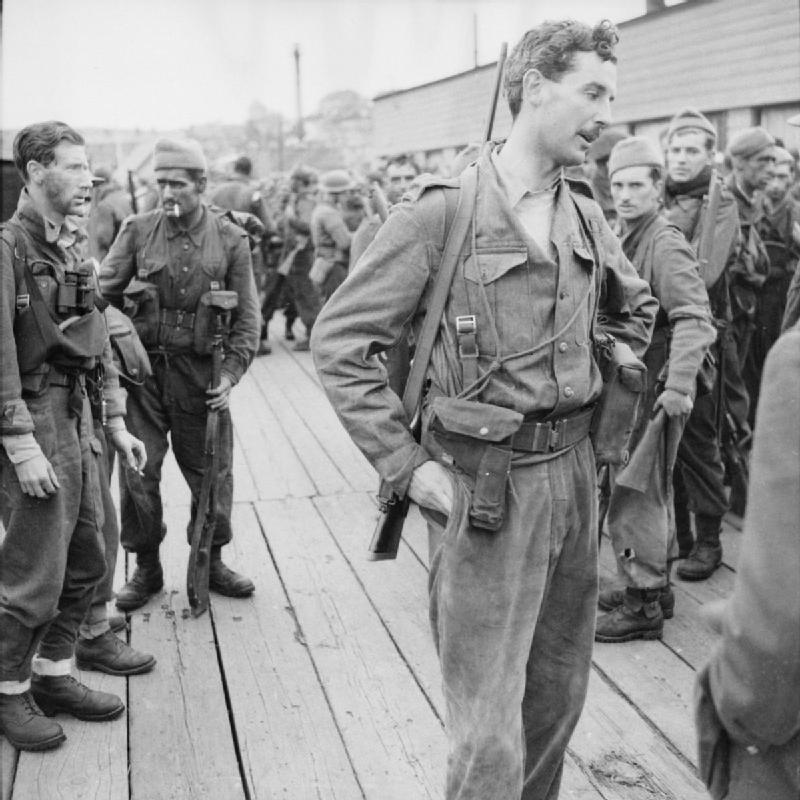
Something reminded me of Lord Lovat today. I had seen a History Channel documentary when I was working away from home and came away with a mistaken impression of Lord Lovat's role in the Normandy invasion. I had thought that he had jumped into Normandy, but he actually went ashore at Sword Beach. He did lead part of his brigade, the 1st Special Service Brigade, to Pegasus Bridge to reach the airborne troops of the 6th Airborne Division who had gone in behind the beach in darkness. I can see that he was a charismatic leader of men in combat. I had not realized that his name was Simon Fraser although I had remembered that he was a Scot. This is the Wikipedia image of Lord Lovat in 1942 at Newhaven after Dieppe. Note that Lord Lovat was a 31-year old Lieutenant-Colonel in this photograph and was a 32-year old Brigadier at Normandy. By the wawy, he was known for carrying a Winchester rifle as his personal weapon in battle. The Wikipedia page has more about his life.

Saturday, February 07, 2009

The 150th Infantry Brigade late on 28 May 1942

The 150th Infantry Brigade commander, Brigadier C.W. Haydon, knew by late on 28 May 1942 that he was in trouble. He redeployed to defend in all directions, as an attach from the East, previously his rear, seemed very likely. Early on 29 May, he was joined by the HQ of 1st Army Tank Brigade with the 44th RTR and a squadron of 42nd RTR with 30 infantry tanks. The only bright spot for the British was that General Cruewell had to make a forced landing and was captured. He had been one of the key Axis commanders and his judgment and skill would be missed. This is based on the account in Vol.III of the Official History.

Tuesday, February 03, 2009

Action in the air over the Gazala Battle by 28 May 1942

For some reason, the British only attacked Axis transport for most of the time. Only by late 28 May 1942 did Bostons from No.12 Squadron SAAF hit Commonwealth Keep. This place remained in Axis hands, despite an attempt to retake it. Other Bostons hit the harbour at Derna, where a report had placed an Italian destroyer. Axis fighters and divebombers were very active over the battlefield. They mostly operated in a hit-or-miss fashion, because they had no information about the situation on the ground, which remained very fluid. In three days, the British lost 16 aircraft, while the Germans lost 10 and the Italians lost 7 aircraft. This is based on the account in Vol.III of the Official History.

Saturday, January 31, 2009

A critical fight on 29 May 1942

As the Axis mechanized forces closed on Knightsbridge on 29 May 1942, they were attacked by the 2nd Armoured Brigade. The brigade was locked in combat with the two German panzer divisions and the Italian Ariete Division. Two regiments from the 22nd Armoured Brigade joined the battle. A sandstorm prevented the 4th Armoured Brigade from reinforcing the British armour. The battle lasted through the day, but the German forces were now concentrated, unlike the British. The 90th Light Division had arrived to complete the German concentration. One casualty occurred when General von Vaerst was wounded. He commanded the 15th Panzer Division. Being a general serving with Rommel was a dangerous occupation. This is based on the account in Vol.III of the Official History.

Tuesday, January 27, 2009

Rommel's plan for 29 May 1942

Rommel saw that his forces were scattered across the desert and were desperately in need of supplies. The long route around Bir Hacheim in the south was vulnerable to attack. Rommel's plans were to concentrate his forces, to resupply them immediately, and to open a new supply corridor through the minefields. A corridor in the vicinity of the Trigh Cappuzo would be ideal. Colonel Westphal, as a good staff officer would do, took the initiative with General Cruewell to ask him to penetrate the minefields through 13th Corps in the North. He had the Italian Sabratha Division attack the South Africans, although they were repulsed. Simultaneously, Rommel personally led a supply convoy around the south to the Afrika Korps. This is based on the account in Vol.III of the Official History.

Thursday, January 22, 2009

At the end of 28 May 1942

Gemeral Ritchie was more satisfied with his situation at the end of the day on 28 May 1942 than was justified. The one dangerous situation was that the Italian divisions Trieste and Pavia were penetrating unprotected minefields "near the Trigh Capuzzo and Trigh el Abd". The British still possessed 240 running cruisers and 90 infantry tanks. They expected replacement tanks to arrive the next day in the form of 40 cruiser tanks and 30 infantry tanks. General Auchinleck thought that his forces were not feeling the necessary urgency, and was concerned. The British were feeling cocky, however, as they captured a copy of Rommel's plans. They figured that they had dealt the Axis forces a good blow. This is based on the account in Vol.III of the Official History.

Sunday, January 18, 2009

The air forces on 28 May 1942 at Gazala

The British air commander, Air Vice-Marshal Conyngham, was committed to provide low-level attacks on Axis forces in the battle. Fighter-bombers attacked targets near El Adem and Bir Hacheim on 28 May 1942. Fighter-bombers and day bombers probably hit the 15th Panzer Division, although in conditions of poor visibility. The British pretty much had free-rein over the battlefield on this day, as the Axis air forces were probably uncertain over their troops' positions in the mobile battle. This is based on the account in Vol.III of the Official History.

Wednesday, January 14, 2009

The next day: 28 May 1942

The 21st Panzer Division and the Ariete Division were able to move on 28 May 1942. The 21st Panzer Division penetrated very far north and took "Commonwealth Keep". The 1st Armoured Division commander, General Lumsden, had wanted to attack the 21st Panzer Division with his two armoured brigades, but the 22nd Armoured Brigade stayed with the 15th Panzer Division. The 2nd Armoured Brigade did attack the Ariete Division west of Knightsbridge. The 1st Army Tank Brigade also hit the Ariete Division from the northwest at the same time. The 4th Armoured Brigade hit the 90th Light Division and pushed it to the south and west. This is based on the account in Vol.III of the Official History.

Sunday, January 11, 2009

The Axis forces at the end of 27 May 1942

The Axis forces had penetrated deep behind the British front at Gazala by dusk on 27 May 1942. The 15th and 21st Panzer Division were just west of El Adem, but had lost one third of their tanks. The 15th Panzer Division was short of fuel and ammunition. The 90th Light Division was somewhat farther east, south of El Adem. The Italian Ariete Armoured Division had attacked Bir Hacheim, but was repulsed. The Trieste Motorized Division had turned north too quickly and was trapped in minefields west of the Gazala line. The DAK headquarters was trapped, without support, just south of Bir Harmat. Rommel's response to the situation was a planned advance with the remaining mobile force, the 21st Panzer Division. This is based on the account in Vol.III of the Official History.

Wednesday, January 07, 2009

The airforce on the first day of the Gazala Battle


The rapidly changing situation effectively neutralized the Desert Air Force, except in the south. The British fixed positions held out and allowed the light bombers and Kittyhawk fighter-bombers to safely operate in support. They were able to punish the 90th Light Division. German fighter operations, including over the forward airfields necessitated withdrawing needed fighter squadrons to fields farther east. Still, South African Bostons acting in the "intruder" role hit airfields near Tmimi and those that were dispersed.


The British were relatively pleased with the situation by nightfall of 27 May 1942, while Rommel was not pleased. The axis forces had lost fully one third of their tanks on that day, despite having penetrated fairly deeply into British lines. This is based on the account in Vol.III of the Official History.

Friday, January 02, 2009

The British try to strike back

The 30th Corps commander ordered the 1st Armoured Division to intervene in the battle as the first day progressed. The 22nd Armoured Brigade was the closest unit, being about 12 miles from the attack on the 4th Armoured Brigade. The 2nd Armoured Brigade was further north, between El Adem and Knightsbridge. The 22nd Armoured Brigade had the ill fortune to be attacked by the 15th and 21st Panzer Divisions. The brigade lost 30 tanks and some guns. The 2nd Armoured Division commander, General Lumsdem, directed the brigade to fall back towards Knightsbridge. Both armoured brigades were able to attack together and damage the Germans in the process. The 1st Army Tank Brigade attacked from northwest of Knightsbridge and also inflicted some damage on the Germans. This is based on the account in Vol.III of the Official History.

Tuesday, December 30, 2008

British problems at Gazala

The British lack of success in the Desert at the Battle of Gazala seemed to have been caused by several factors: the unwillingness to fight with concentrated forces and the poor communiction between forces at the front and the commanders in headquarters in the rear. The Germans solved the second problem by having commanders lead their troops at the front. The disadvantage of that was that commanders were often killed or captured and they risked being out of touch with their forces that were not in their immediate vicinity. The Germans fought with concentrated groups of all arms that were highly mobile (when they were supplied). The British tried to have troops everywhere and to cover large expanses with small forces. That meant that they were always fighting superior forces and had their small groups overwhelmed by the concentrated German and Italian battlegroups in Rommels army.

Tuesday, December 23, 2008

The next blow: 7th Armoured Division HQ overrun

Soon after the neutralization of the 4th Armoured Brigade, the 7th Armoured Division advanced HQ was overrun by German armoured cars and General Messervy and some staff officers were captured near Bir Beuid. The 30th Corps commander did not learn of the loss until later on the night of 27 May 1942. General Messervy was able to escape, but the 7th Armoured Division was without a commander for another two days. The Army Commander, at first, wouldn't believe that it had happened until 28 May. This is based on the account in Vol.III of the Official History.

Saturday, December 20, 2008

27 May 1942 early in the day

Brigadier Filose, 3rd Indian Motor Brigade commander, told General Messervy at about 6:30am that he was faced with a German panzer division. In fact, it was the Italian Ariete Armoured Division and some 21st Panzer Division tanks. The 3rd Indian Motor was overrun and lost prisoners and equipment. The survivors were sent back to Egypt to reform the brigade. Two hours later, the Axis forces attacked the 7th Motor Brigade, commanded by Brigadier Renton, at Retma. Brigadier Renton was able to withdraw his brigade to Bir el Gubi. After 7:30am, the 4th Armoured Brigade, ordered forward to support the 3rd Indian Motor Brigade, was hit by the 15th Panzer Division The 8th Hussars ceased to exist as a coherent unit and the 3rd RTR was "roughly handled". the 4th Armoured Brigade was able to damage the German division, but had to withdraw towards El Adem. The 90th Light Division followed the British brigade for a while. The British seemed to have made the usual mistake of committing their units piecemeal. This is based on the account in Vol.III of the Official History.

Wednesday, December 17, 2008

The battle starts: 26 May 1942

The Battle of Gazala started on the afternoon of 26 May 1942 when General Cruewell's battle group moved out towards the British positioned between Gazala and Sidi Muftah. The battle group was seen by British screening forces consisting of elements of the 4th South African Armoured Car Regiment and the 2nd King's Royal Rifle Regiment from the 7th Motor Brigade. They followed a column that was heading for Bir Hacheim, where the Free French were located. Rommel's Operation Venezia had commenced, but without surprise. At 6:30am on the 27th, the 3rd Indian Motor Brigade was overrun after a short battle. They lost 440 men and what little equipment they had. this is based on the account in Vol.III of the Official History.

Sunday, December 14, 2008

The Battle of Gazala in three phases

In Chapter X of Vol.III of the Official History, the Battle of Gazala is described as having three phases. The first phase was 26 to 29 May 1942. This commenced with the sweep around the British southern flank by German mobile forces. This failed to dislodge the British forces that were in the line stretching south from the sea to the far end at Bir Hacheim. In the second phase, the Axis mobile forces sat in "the Cauldron" turned on the defensive, decisively defeating a British attack on 5 June. The third phase was the deciding attack on 11 to 13 June that defeated the British armoured forces. In response, General Ritchie resigned the British to defeat and planned to withdraw towards Egypt. This is based on the account in Vol.III of the Official History.

Wednesday, December 10, 2008

The start of the battle: 26 May 1942

The Battle of Gazala lasted four weeks and ended with the capture of Tobruk. The first phase started in the afternoon on 26 May 1942 when the DAK and Italian 20th Corps started forward to the southeast with the intent to sweep around the southern flank of the Gazala line. Four Italian infantry divisions (Sabratha, Trento, Brescia, and Pavia were opposite the British infantry positions west of Gazala. The Italian Trieste motorized division turned too soon by mistake and was separated from the main body. That left the Ariete Armoured Division, the 15th and 21st Panzer Divisions, and the 90th Light Division to sweep down around Bir Hacheim. This is based on the account in Vol.III of the Official History.

Sunday, December 07, 2008

The air forces in late May 1942

The British waited for the coming Axis offensive in a distinctly inferior position in the air. They were both at a numeric and a qualitative disadvantage. There were 312 Italian and 392 German aircraft in North Africa, "of which 497 were servicable". The British only had 320 aircraft in the "Desert Air Force", but they only had about 190 servicable aircraft of that number. Admittedly, in the entire Middle East, the British had 739 servicable aircraft, but the Axis had about 1000 aircraft. Besides, the British did not have a fighter that could compete with the Bf-109f.

Thursday, December 04, 2008

The opposing sides

Not counting the Italian Littorio Armoured Division, which was still in the process of arriving in the desert, the Axis forces had the following strengths:

332 German tanks
50 Pzkw IIs
223 Pzkw IIIs
19 Pzkw IIIJ 50mm L60
40 Pzkw IVs

228 Italian tanks
mostly M13/40 and M4/41 tanks

In reserve
10 Pzkw IIs
38 Pzkw IIIs
19 Pzkw IIIJ 50mm L60
1 Pzkw IV
9 Pzkw IV Ausf F2 75mm L43


The British had a considerable force, as well:

1st and 7th Armoured Divisions
167 Grant tanks
149 Stuart tanks
257 Crusader tanks

1st and 32nd Army Tank brigades
166 Valentine tanks
110 Matilda tanks

1st Armoured Brigade (ordered to join)
75 Grant tanks
70 Stuart tanks


This is based on the account in Vol.III of the Official History with German tank types from Peter Chamberlain and Chris Ellis

Tuesday, December 02, 2008

The Axis plan

Axis leaders decided on 1 May 1042 that Rommel should attack at the end of May with the aim of capturing Tobruk. They wanted Rommel to stop at the Egyptian border and wait for Malta to be captured. Rommel intended to feint near the sea while he, Rommel, led a force consisting of the German mechanized forces and the Italian XXth Corps driving through Bir Hacheim and then turn northwards. This is based on the account in Vol.III of the Official History.

Friday, November 28, 2008

British expectations circa 20 May 1942

General Ritchie actually foresaw that the Axis attack would go south around the end of the British defensive line. General Auchinleck thought that would be a possibility, but really expected that Rommel would feint to the south and attack through the defensive line. Whatever happened, General Auchinleck wanted to keep the British armour concentrated. The uncertainty, however, led the other commanders to position the 7th Armoured Division further south behind Bir Hacheim while the 1st Armoured Division was north, to the southwest of Tobruk, near El Adem and Knightsbridge. This is based on the account in Vol.III of the Official History.

Monday, November 24, 2008

The British defences in the Desert in late May 1942

The British forces, in late May 1942, were spread across the desert. The 1st South African Division, with the lost brigade replaced by the 9th Indian Infantry Brigade Group sat to the immediate west of Gazala and stretched a short distance from the coast. One their flank was situated the 50th Division. The 150th Brigade, from the 50th Division, was located further southeast, leaving a gap defended only by the minefield. The 1st Free French Brigade Group lay isolated and exposed at Bir Hacheim far to the south. To their east, about 15 miles, sat the two armoured divisions (the 1st and the 7th). This is based on the account in Vol.III of the Official History.

Thursday, November 20, 2008

May 1942

The downside of having the huge stockpile of fuel and supplies at Belhamed was that the base was really too far forward. That meant once the battle started, the British were forced to use forces to defend Belhamed rather than to be able to fight as the battle flowed. Already by 10 May 1942, General Auchinleck was informed that the British needed to fight in May, and as soon as possible, as a German offensive was imminent. The army was still not really prepared to fight. General Ritchie's forces were widely spread across the desert, generally out of supporting distance. The Free French at Bir Hachiem, were hung out 13 miles from the 150th Infantry Brigade and six from the 69th Infantry Brigade. With their forces spread out wide, they relied heavily on minefields to block the gaps. This is based on the account in Vol.III of the Official History.

Tuesday, November 18, 2008

British preparations up to 25 May 1942

General Auchinleck had hoped to be able to build up the British army in the Western Desert to the level that they would be superior in strength to the Axis army. He did not want to be pushed into a premature action where the strength that they had would be squandered. To be ready for the planned offensive, the British had built three forward bases: Tobruk, Belhamed, and Jarabub. Belhamed was the largest with 26,000 tons of supplies. Tobruk had 10,000 tons and Jarabub only had 1,000 tons. The coastal railroad was pushed forward so that the railhead was now up to Capuzzo. By late May, they had reached Belhamed, although the railhead was still incomplete and temporary. By the 25 May 1942 date, they had 80% of the supplies that were needed, although they only had two thirds of the fuel that they wanted to have on hand. The shortfall was created by the loss of fuel ships to attacks on the run west along the coast. This is based on the account in Vol.III of the Official History.

Saturday, November 15, 2008

Grants and 6pdr anti-tank guns by May 1942

As Grants arrived in the desert, the expedient measure was taken of mixed armoured regiments. A portion of the regiments were equipped with two Grant squadrons and one Stuart squadron. Another variant organization had two Crusader squadrons and one Grant squadron. The plan was for some armoured brigades to have all Grants and Stuarts, while others would be equipped with Crusaders and Grants. The armoured divisions still had two armoured brigades, as the new organization with one armoured brigade and one motor brigade was still just a plan and had not been implemented. In the event, the Germans attacked before the British were ready. The best British equipment were the Grants and the 112 6pdr anti-tank guns which had arrived. At least the three British armoured brigades were up to strength in tanks at the time of the Axis attack. This is based on the account in Vol.III of the Official History.

Thursday, November 13, 2008

New equipment in the Desert in early 1942


The British had received Crusader II tanks with thicker armour but still very unreliable mechanically. They still did not have capped armour piercing rounds to deal with German face-hardened armour. Only the American Stuart tanks had capped armour piercing rounds, but only of 37mm caliber.


The Germans started to receive new Pzkw III tanks ("Specials") with the 50mm Kwk L60 gun developed to deal with the Russian T-34 tanks. While most of the Pzkw III tanks on hand only had the 50mm KwK L42 guns, they had 19 of the Specials by the beginning of the Gazala battle.


The one bright spot for the British is that they now were receiving American-made Lee tanks (they were generally called Grants, but the first arrivals were actually named the General Lee tank). The Lee and Grant tanks had a hull-mounted 75mm gun in a sponson. The gun was medium velocity, but fired a useful HE round which was useful against German soft vehicles, infantry, and artillery. This is based on the account in Vol.III of the Official History.

Sunday, November 09, 2008

Reorganizing the army in the desert

General Auchinleck had been displeased with the lack of coordination between infantry, armour, and artillery during the Crusader battle. He made organizational changes to reshape units more in line with what the Germans were thought to use. Armour divisions no longer would consist of two armour brigades and a support group, but would have one armour brigade and one motor brigade, with supporting artillery at the division level. Infantry brigades and motor brigades gained artillery which had been segregated in the past. The infantry tanks were kept in the Army tank brigades, not attached to divisions. This is based on the account in Vol.III of the Official History.

Friday, November 07, 2008

The Desert Air Force from February to May 1942

The Desert Air Force needed time, just like the Army, for "rest, refitting, and training". There problem was that there was no time for anything but intensive operations. Those operations proceeded with difficulty for a number of reasons. The new Hurricane Mk.IICs with four 20mm cannon mechanisms were clogged by dust. Kittyhawks had problems with their Allison engines and were difficult for Hurricane pilots to learn to fly. From early February 1942 to late May, "nearly 14,000 sorties" were flown. At the cost of almost 300 aircraft lost, the destroyed "89 German and over 60 Italian aircraft". All this occurred during the lull in ground operations following the German advance from El Agheila after the Crusader Battle. This is based on the account in Vol.III of the Official History.

Sunday, October 26, 2008

The Axis air effort in April to May 1942

The Axis air effort in March 1942 had concentrated on eliminating Malta as a threat against Axis shipping. They succeeded in that effort. By April, they concentrated against targets that would help the planned May land offensive. They hit Tobruk, the railroad along the coast, the forward airfields and troops deployed near the front. Particularly the German air force recommenced hitting Alexandria and the Suez Canal. the British night fighters of No.89 Squadron had a field day against Axis night bombers. Fighters and bombers were shifted from Sicily to North Africa, as well as to Greece and Crete. The operational tempo greatly increased by the third week of May. This is based on the account in Vol.III of the Official History.

Sunday, September 21, 2008

Increased air activity from March


Because of the convoy run from Alexandria to Malta in March 1942, the air activity increased considerably. The British made a special effort against the Axis air forces, especially the Luftwaffe. In conjunction with the convoy, the army conducted raids against Rommel's army. These were supported by fighter cover and resulted in three Me-109's destroyed, although at the cost of five Kittyhawks and one Hurricane. At the same time, Wellington bombers raided airfields and ports.


When the Germans started flying supplies and troops over the sea in Ju-52's, long-range Kittyhawks and Beaufighters were sent against them. After a successful action on 12 May 1942, the Germans resorted to escorting the Ju-52's with Me-109's fitted with "extra fuel tanks". This is based on the account in Vol.III of the Official History.

Sunday, September 07, 2008

Axis fighter-bombers

The Axis air forces in the desert started using fighter-bombers in response to the British operations. El Adem and Gazala received visits from Me-109 fighter-bombers, which achieved "considerable success". Due to the impact of dust on operations, the British pulled their fighters back to Gambut and Gasr el Arid. They were further from the front, which gave sufficient time to intercept German raiders. They also had better communications and AA defenses. Before ground operations began in May, British fighters mainly operated in defense of Tobruk, shipping, roads, rail transport, and airfields. They had to contend with Me-109's using the sun to attack. Four Hurricanes were jumped by six or eight Messerschmitts. Two were shot down and two were badly damaged. The British adopted the tactic as well with equal success. They shot down six Macchi 200 fighters over Tobruk. This is based on the account in Vol.III of the Official History.

Sunday, August 17, 2008

The air war in March through May 1942


After the British fighter bombers and day bombers achieved some successes against Axis airfields in Western Cyrenaica, the Germans resolved to do something to put a stop to it. They decided to go after British airfields with the aim, as the Official History quotes, "to regain air supremacy".


The British aircraft also staged a low level of attacks on the Axis supply line. Why this was only a low level, we have a hard time understanding, but that is what it was. During this period, about one hundred sorties against ground targets were carried out by Beaufighters, Hurricane and Kittyhawk fighter-bombers. Particularly successful were the Hurricanes that operated at night against encampments, transport, and aircraft.


Another change was that tactical reconnaissance units were replacing Hurricane Is with Tomahawks. In the period leading up to May, tactical reconnaissance in the forward areas was critical, so the effort to improve the survivability of reconnaissance aircraft was very important. This is based on the account in Vol.III of the Official History.

Sunday, August 10, 2008

Malta neutralized


Unlike May and June 1941, Malta was not a factor in the war in North Africa in May 1942. A few Wellingtons still operated from Malta, but they were only able to make sixty sorties against Tripoli during the "lull" in the fighting. They did have a few successes while raiding Palermo, Sicily, sinking or damaging ships.


Only Liberators from Egypt could now hit Tripoli, and they only arrived in numbers by May 1942. Because of that, the main successes against Axis shipping were achieved by raiding Benghazi, due to the closeness of Desert air fields. Bombers operating around the clock made 741 sorties against the port and installations at Benghazi from February to May. As the enemy showed signs of an imminent land attack, Kittyhawks and Bostons appeared over Benghazi during daylight. The attacks seemed to not seriously interrupt the supply buildup, however. This is based on the account in Vol.III of the Official History.

Sunday, July 27, 2008

Fighter Bombers

In the Spring of 1942, there was a shortage of British day bombers in North Africa. As a way to make up for the shortage, fighters came to be fitted with "one or more bombs". Fighters could always shed their bombs if they needed to perform as fighters, so there was little negative about their role as fighter bombers. Both Hurricanes and Kitty Hawks were fitted with bombs in May 1942. One Hurricane and three Kitty Hawk squadrons started operations as fighter bombers. Initially, they carried two 250lb bombs, but Kitty Hawks eventually came to be armed with a single 500lb bomb. This is based on the account in Vol.III of the Official History,

Sunday, July 20, 2008

Day Bombers

The priority for day bomber crews was bombing practice. The usual altitude was eight to ten thousand feet, in level flight. Training also was conducted in 15,000 foot altitude bombing and bombing in a shallow glide. The Douglas Boston was replacing the older day bombers and had the advantage of higher speed than the Martin Maryland and Bristol Blenheim. The new arrangements in late spring of 1942 facilitated greater cooperation between British fighters and day bombers. Now, the two were based in close proximity and that allowed the fighters to usually escort the bombers. Interestingly, one of the new procedures was to avoid flying "down sun". This is based on the account in Vol.III of the Official History.

Saturday, July 12, 2008

The Bf-109F threat (Me-109F)

The Bf-109F (the official history calls it the Me-109F) was present in enough strength in early 1942 that the fighter plane was causing problems for the British over the desert (as many problems as it was causing the Russians). British pilots tended to be under trained in the desert and they were not very accurate in firing. As part of the measures implemented to better counteract the Bf-109F, British pilots started "shadow firing", rather than firing at a towed drogue. Radar coverage had improved to better detect low-flying Bf-109F's and there were more ground observers equipped with radios. For more flexibility and to reduce the number of targets for the German planes, the British instituted patrols with 4 to 6 fighters. This is based on the account in Vol.III of the Official History.

Sunday, July 06, 2008

The British air force in the Middle East


By Spring 1942, the British air strength was greatly strained by the military situation. They were especially short of trained aircrew. One of the ongoing complaints about the air crews in the Middle East was the lack of operational training. The Middle East needed reinforcements, but the home forces were so taxed that there was little available to send. Bomber Command was in such as state that there was only one pilot per heavy bomber at this date. The Air Ministry reacted negatively to Air Marshall Tedder's plea for more air crew for the Middle East, but they stretched enough to send some reinforcements.


An important piece of the plans for the upcoming land offensive was to have a stronger air strength available to both protect the troops and to attack the Axis forces on the ground and sea. A new fighter group headquarters, No.211 Group, was built from two wing headquarters. Group Captain K.B.B. Cross was the first commander. He had been a senior wing commander during the recent Crusader battle. This is based on the account in Vol.III of the Official History.

Saturday, June 21, 2008

Richard O'Connor

I was reading the Wikipedia entry for General Sir Richard O'Connor, who beat the Italians in Operation Compass that took Cyrenaica from the Italians, starting from late 1940 and ending at Beda Fomm. What interested me was that O'Connor served under J.F.C. Fuller, as brigade major of the Experimental Brigade, from 1921 to 1935. General Fuller was an early advocate for the use of combined arms forces, including armour, artillery, infantry, and aircraft in support. O'Connor had this mysterious knowledge about mobile forces that I could not explain.

Wednesday, June 18, 2008

The Royal Air Force in the Desert from February to May 1942

The end of the Crusader Battle left the RAF to rebuild. They had suffered great losses in the battle during a transition period when some aircraft types were out of production while their replacements were slow in arriving. As the Hurricane I had lost its effectiveness, there were not many Hurricane IIs in the pipeline. This was the case for a number of aircraft:

Old Model Status New Model Status
Hawker Hurricane I outperformed Hawker Hurricane II slow in arriving
Curtis Tomahawk production ended Curtis Kittyhawk few arriving
Martin Maryland production ended Martin Baltimore few arriving,
needed modifications
Bristol Blenheim IV engine troubles Douglas Boston engine troubles


One positive move was the arrival of Consolidated Liberator and Handley Page Halifax heavy bombers in the Middle East. They were much more capable than the older Vickers Wellington medium bombers. They belonged to the original twin-engined heavy bomber category that had gradually become obsolescent. This is based on the account in Vol.III of the Official History.

Monday, June 09, 2008

Malta and North Africa in May 1942

The Middle East commanders continued to obliviously send communications to Britain that greatly incensed the prime minister and the Chiefs of Staff. For example, on 9 May 1942, they stated that they thought that the loss of Malta would not be fatal to the position in North Africa, as long as the supply lines through the Indian Ocean remained open. The restated their opinion, which proved correct, that an attack without adequate force strength would result in the loss of the attackers. If there was no reserve, Egypt would be lost. They did acknowledge that the Axis forces seemed to be grouping for an attack on the Gazala line. The Middle East commanders thought that such an attack risked the loss of significant Axis strength and might even open the way to a successful counterattack. The Prime Minister would have none of it, however: "We are determined that Malta should not be allowed to fall without a battle being fought by your whole army for its retention". This is based on the account in Vol.III of the Official History.

Sunday, June 01, 2008

The Chiefs of Staff and Prime Minister force premature action

The Prime Minister and Chiefs of Staff refused to acknowledge that the army in North Africa was seriously out-matched by the Axis forces in May 1942. They were back to the late 1940 mentality that thought that the army needed to go forward when needed, regardless of the consequences. Strategic factors outweighed the facts on the ground. General Auchinleck was also concerned about the situation in the Far East and was fully prepared to go in the defensive so that more forces could be sent East. The concern in Britain, though, was that Malta was very vulnerable and could be easily lost. They felt that such a loss would seriously compromise the entire Commonwealth defense posture. Therefore, the army had to attack soon to relieve the pressure on Malta and allow air forces to operate closer in support. Those in Britain also had reason to expect an Axis attack in North Africa in June and wanted to forestall that attack. This is based on the account in Vol.III of the Official History.

Saturday, May 24, 2008

Early April 1942

Naturally, the decision to allow time for training the troops greatly angered the Prime Minister. He decided that his men who he had sent to the Middle East had simply not answered the arguments. Churchill assumed that he was correct and that the commanders in the Middle East were wrong! After accepting mid-May, the commanders in the Middle East decided that they could not commit to an attack, even at that date. All this had occurred very early in April 1942. By 9 April, the Chiefs of Staff had become very concerned about the safety of Ceylon, and ordered the Middle East to send further forces East. They were ordered "to send 30 Hurricane IIs, 20 Blenheim IVs and a squadron of Beaufort torpedo-bombers". When the Middle Eastern commanders inquired about the situation, they were warned that the Japanese could well threaten India and very soon. General Auchinleck's reaction was that under the circumstances, it would be foolhardy to risk and offensive in North Africa when the situation in the East was so grim. This is based on the account in Vol.III of the Official History.

Saturday, April 26, 2008

The Prime Minister is angered

Churchill, as always, was pressing for a premature offensive in the desert. General Auchinleck presented the reasons why such a move would be risking disaster. Churchill, in fit of pique, wanted to bring Auchinleck back to Britain to confront him. Auchinleck argued that he did not want to be absent from the theater, as he did not want anyone but himself to be responsible for even a short period. In a compromise, Sir Stafford Cripps, who was travelling to India, was diverted to the Middle East to meet with Auchinleck and his commanders. The Vice-CIGS, General Nye, was also present. They met with Auchinleck and were convinced that he was correct. One factor ignored by the Prime Minister and others in Britain was the urgent need for training of raw troops. Churchill was extremely displeased, but he grudgingly accepted the date of mid-May 1942 for the offensive against Rommel's forces. This is based on the account in Vol.III of the Official History.

Thursday, April 17, 2008

The Middle East was to be further stripped of forces

The Middle East was informed on 17 February 1942 that they would lose the 70th Division, which was to be sent to the Far East, in the face of Japanese advances. They were also warned that they were likely to lose the 9th Australian Division, as well. At the same time, Alan Brooke, the CIGS, warned General Auchinleck that a division in Iraq would be withdrawn to India. At best, one more division was would be sent from Britain to the Middle East before the fall of 1942. The Chiefs of Staff in London was ready to assume a defensive posture in the Middle East in order to stop the Japanese offensive in the Far East. In response, General Auchinleck replied that an offensive in the Western Desert prior to 1 June would put the entire enterprise in North Africa at risk. The one spot that the Chiefs of Staff were determined to protect was Malta. They were prepared to commit a considerable force to pass a convoy through with supplies and arms. This is based on the account in Vol.III of the Official History.

Sunday, April 06, 2008

A shortage of Ordnance Workshops in the Middle East

One of the continual complaints in the Middle East from mid-1941 onwards was the long period required to return damaged tanks to action. Besides the inherent shortcomings of the Crusader and other tanks, a major factor was the scarcity of Ordnance Workshops. This shortage was acknowledged, but a series of events thwarted sending more to the Middle East. In October 1941, the commanders had decided that replacement drafts were more important than Ordnance Workshops, so they were bumped from several convoys. Only two were in transit by March 1942. Another workshop was blocked by the intended convoy being diverted to the Far East. The ongoing battle between the commanders and staff in Britain, who desired an attack as quickly as possible and the commanders and staff in the Middle East, who did not want to attack until they had prospect of success. This is based on the account in Vol.III of the Official History.

Wednesday, March 19, 2008

The British plan for an offensive in 1942

Because of the pressing need for the British to base aircraft in western Cyrenaica, a plan was prepared that envisioned a force of "three armoured divisions, two armoured brigade groups, one army tank brigade, and three infantry divisions" by mid-April 1942. This plan was made as early as February 1942. A tank superiority of 3:2 was needed to fight the Germans, due to the inferiority of the Crusader tank. There was increasing pressure from the staff in Britain to launch an early offensive, but the commanders in North Africa, including General Auchinleck resisted an attack before a superior tank force could be assembled. The goal was not just to take Cyrenaica but to advance into Tripolitania. This is based on the account in Vol.III of the Official History.

Thursday, March 06, 2008

The plan with respect to Tobruk

In February 1942, General Auchinleck had told General Ritchie to do everything possible to keep Tobruk from capture. What General Auchinleck resolved not to do was to have a division in Tobruk and have the Axis forces surrounding the fortress. The intent was to withdraw to the frontier rather than allow a division to be tied down and put at risk. The commanders in chief concurred, apparently, at least in February. February to May would be spent in building up the tank forces for a new offensive that would reconquer the western Cyrenaican airfields. They were desperately needed to allow convoys to run to Malta and to operate against Axis shipping. This is based on the account in Vol.III of the Official History.

Saturday, March 01, 2008

The plan to invade Malta in early 1942

Taking the island of Malta would have been a much more difficult task than taking Crete, a year before. While Crete was taken by airborne forces, Malta would require troops and equipment landed from sea. The first stage would have 8300 men landing on the island by landing craft. These initial troops would be supported by artillery and tanks also landed. Supplies and reinforcements would follow, also by sea. The Italian fleet would prevent British surface ships from reaching the island. There would also be a flotilla of German submarines to protect the attacking forces and to prevent reinforcements and supplies from reaching Malta. Germany would also supply Italy with "40,000 tons of oil fuel and 12,000 tons of aviation spirit". Three corps were allocated for the attack. The one Airborne Corps had one German and one Italian airborne division. Of the other two corps, one had two Italian divisions and the other would have three. Additional forces included six independent Italian battalions, "two tank battalions, some armoured cars, self-propelled artillery, motor-cyclists and ancillary units and a few German tanks". Between 370 and 470 tranport aircraft would carry the airborne forces. These would include 155 Italian SM.82's, the rest being German Ju-52's. This is based on the account in Vol.III of the Official History.

Thursday, February 21, 2008

Rommel decides against attacking Malta

Back in March 1942, Rommel still thought that taking Malta soon should be a priority. He changed his mind, along with everyone else in authority on the Axis side. Field Marshal Kesselring had wanted to attack Malta early because he knew that the German air strength would be greatly reduced to meet other needs. The Italians knew that they would not be ready for an amphibious attack before July, so they opposed an early attack. By April, Rommel realized that he would need to attack in the desert before the British, who were planning to attack in May. Taking Tobruk was now the top priority for the Axis side. While the focus shifted to the western desert, a joint staff with Germans and Italians continued to plan for a later attack on Malta. This is based on the account in Vol.III of the Official History.

Tuesday, February 12, 2008

Submarine losses in April and May 1942


One reason that the Axis convoys to North Africa were safer was that the British had lost three submarines. Two U-class submarines, the famous Upholder and the Urge were both lost in April 1942. Lt-Cdr Wanklyn's luck had run out when the Upholder was sunk by an Italian torpedo boat on 14 April. The Urge was lost without a trace after sailing from Malta on 27 April. The Official History suggests that she was mined. The third submarine, the Olympus, was mined a short distance from Malta on 8 May.


The Germans lost three submarines during May. A Lockheed Hudson from No.233 Squadron attacked U.573 and forced her into internment in Spain. A Consolidated Catalina from No.202 Squadron and the destroyers Wishart and Wrestler sank U.74 a day later. A Short Sunderland from the same squadron damaged a submarine late in May. U.568 was sunk by the destroyers Eridge, Hero, and Hurworth northeast of Tobruk. The air connection, in this case, was that a Blenheim from No.203 Squadron had sighted the submarine and alerted the destroyers.


This is based on the account in Vol.III of the Official History.

Monday, February 11, 2008

Some analysis

From what we have seen so far in 1942, following the Japanese attacks in the Far East, the British and Commonwealth forces were stretched to the breaking point. We can say with hindsight that the Middle East was stripped down too far and the British paid dearly during the spring and summer, because of that. The situation in the Pacific was stabilized not by the force of arms on the ground but because of naval successes at the Coral Sea and the Battle of Midway. The battle that was spread across 1942 into 1943 in the Solomons was what finally wore down the Japanese enough that the Allies were able to go on the offensive. Because of that overreaction, which is understandable but regrettable, North Africa was almost lost. Another factor as the Axis air superiority, partly due to their geographical advantage in Cyrenaica and partly due to better aircraft in the Bf-109f. More Spitfire V's had to be sent to the Mediterranean theater to restore the situation in the air. The great influx of American-built aircraft also helped, even when the fighter aircraft were inferior, initially. It was only when the P-51B's entered service that there was a better aircraft available.

Saturday, February 02, 2008

British naval operations in May 1942

After the destruction of three of four of Captain Poland's destroyers, no further surface operaations could be mounted from Alexandria in May 1942. The destroyer division had been attacked by several waves of aircraft, mostly Ju-88 divebombers, but also some He-111's. The Ju-88's were based at Heraklion and had just completed training in anti-shipping operations. In mid-May, the Italians had mounted another "human torpedo" attack, but this one was ineffective. Meanwhile, submarine operations continued unabated, but submarine losses rose on both sides. The submarine ace Lt-Commander Wanklyn and the Upholder were lost in May to an Italian torpedo boat. One factor would ease the dire British naval situation. The Germans were forced to shift combat aircraft to Russia in increasing numbers. This is based on the account in Vol.III of the Official History.

Sunday, January 27, 2008

Admiral Harwood arrives in the Mediterranean

A replacement for Admiral Cunningham finally arrived on 20 May 1942. The new commander was Admiral Sir Henry Harwood, the commander of the cruisers that fought the Admiral Graf Spee in 1939. Admiral Harwood agreed with the commanders that what was needed were long range aircraft with endurance sufficient to allow them to find Axis convoys at sea so that they could be attacked. Just between 1 April and 13 April, there had been 26 convoys that passed east of Malta. Only five were seen by reconnaissance aircraft soon enough to allow them to be intercepted. Admiral Harwood wanted 12 Consolidated Liberators for this role, but they were not available for this sort of role. In early May, a destroyer force from Alexandria was almost wiped out by air attack while they stalked a convoy. They put to sea on 10 May, but where attacked by air on 11 May. Only the Jervis eventually returned to Alexandria, while the other three destroyers, the Lively, Kipling, and Jackal, were all sunk. The Jackal was torpedoed by the Jervis after an attempt was made to tow the ship. The Jackal had a fire in one boiler room that could not be extinguished, so the decision was made to torpedo the ship so that the lone survivor might escape back to Alexandria. This is based on the account in Vol.III of the Official History.

Saturday, January 12, 2008

The war against Axis shipping to North Africa in April and May 1942

With Malta being so heavily bombed, all anti-shipping sorties had stopped by April and into May 1942. Because of this, the Axis forces were able to ship supplies in relative safety during this period. In all of April and May 1942, only 13 German Italian merchant ships were sunk in the Mediterranean Sea, and all but one of these were due to British submarines. A large number of RAF anti-shipping sorties were flown in April and May, but the 750 sorties only sank one ship. The German air superiority over the Mediterranean, coupled with the Axis advance to Gazala meant that less of the Mediterranean could be searched for targets by the British aircraft. One disastrous attack mounted on 14 April 1942 cost the RAF five Beauforts and one Blenheim with no targets sunk. By the middle of May, 2,500 tons of supplies reached Benghazi every day. This is based on the account in Vol.III of the Official History.

Friday, January 11, 2008

Status and some idle thoughts

In case you had figured this out, I have a situation going that is leaving me with little time to write. I would hope that I will eventually have more time again. My plan includes acquiring more of the Official History books from the war in North Africa, if not other theaters, as well. I would summarize those and comment on them, as well as books such as Harry Klein's Springboks in Armour: The South African Armoured Cars in World War Two. I also would like to acquire some more of the basic source books for the war in North Africa, as well as more information about British armoured fighting vehicles, if not German, French, Italian, American, and Russian.

Thursday, December 27, 2007

The changed situation in early 1942

As the daylight Axis air raids on Malta grew fewer and smaller, there were more raids at night. These were opposed by Beaufighters of No. 1435 flight, acting as night fighters. By May 1942, the tonnage of bombs dropped on Malta had fallen to 520 tons, which still as great as the highest month in 1941. Probably the greatest hazard in this period were Axis minefields laid by "fast German motor-boats". They had laid 600 mines and 400 anti-minesweeping devices around Malta since February 1942. These were effective, as one or two British submarines were lost to mines. While the Welshman trip had helped the ammunition supply, the island was still in danger and could be lost if the June convoy failed. This is based on the account in Vol.III of the Official History.

Friday, December 14, 2007

The action involving Malta in May 1942


One the night of 8 to 9 May 1942, the fast minelayer Welshman had made a run to Malta bringing precious supplies to the island. The Welshman had been disguised as a French large destroyer and had sailed past Sardinia early on 9 May. Welshman was speedily unloaded and sailed by 8:40pm, having been refueled with 300 tons of oil fuel from Malta's store.


The situation in the air over Malta turned to the British advantage, as so many German aircraft were withdrawn and so many Spitfires had been flown in, that the British had air superiority for the immediate future. The Eagle brought another 17 Spitfires on 18 May, after the island had received 123 in about a month. By late May, Fliegerkorps II only had 42 bombers, 36 fighters, and 13 reconnaissance aircraft. The Axis lost about 40 aircraft over Malta, while the British only lost 25 in combat. Six of those were caught on the ground, but that was much better than the 30 lost on the ground in April. This is based on the account in Vol.III of the Official History.

Sunday, December 09, 2007

Early May 1942

The next big operation to supply Malta took place in early May 1942. The American aircraft carrier Wasp and the aircraft carrier Eagle brought 64 Spitfires, which were flown to Malta early on 9 May. They arrived at Malta without interference and the Wasp arrived back at Scapa Flow on 15 May. The first Spitfires landed at 10:30am and had an hour-and-a-half time before the first Axis air attacks. Only 60 of the Spitfires actually landed at Malta. One of them crashed during takeoff, one diverted to Africa, another went down at sea, and the fourth crashed at Malta. The intent had been to send six Albacores to Malta, but they all had malfunctions that necessitated landing back on the Eagle. This is based on the account in Vol.III of the Official History.

Friday, November 23, 2007

The new condition from May 1942

On 15 May 1942, Lord Gort as appointed as "Supreme Commander of the Fighting Services and of the Civil Administration" of Malta. The Malta Defence Committee was concerned that an airborne invasion of Malta was planned. There were indications from Sicily that airfields that were suitable for gliders were being prepared. The authorities in Britain disagreed, as they had no intelligence that an invasion was planned. More Spitfires were going to be sent by the USS Wasp and the aircraft carrier Eagle which was available again. The minelayer Welshman, capable of very high speeds and with a great amount of internal volume, would arrive on 10 May with 340 tons of supplies. Dispersal pens were readied for the arriving Spitfires and every preparation was made to prevent them from being caught unprotected on the ground. The Welshman was bringing more AA ammunition that would allow freer fire from the ground. This is based on the account in Vol.III of the Official History.

Saturday, November 17, 2007

Malta saved

Just when the situation on Malta had been grimmest, after 28 April 1942, the Axis bombing slowed considerably. Primarily, this was because German air attacks had slowed greatly. The Italians continued attacks, but with smaller numbers of aircraft. In recognition of the sacrifices made by the people of the island, King George VI awarded the island the George Cross. Such awards to a locality had been made right after the Great War to Dunkirk, Verdun, and Ypres. The island leadership was changed at this time and Lord Gort was appointed to command and to be governor. He served as governor from 1942 until 1944. He previously had been governor of Gibraltar and at the start of the war in 1939, he commanded the BEF. This is based on the account in Vol.III of the Official History.

Tuesday, November 13, 2007

The naval situatuation outside the Mediterranean Sea in late Spring 1942

The overall British naval situation looked bleak in the late Spring of 1942. The Germans were having a successful war against Allied shipping in the Atlantic. The German battleship Tirpitz and other major warships were positioned in Norway and posed a double threat against both the convoys to Russia and in the Atlantic. The threat from German naval forces above and below were causing convoys to not sail, out of fear of unacceptable losses. The British were feeling intense pressure to provide arms to Russia, but had experienced some disasters in the northern waters. The United States had sent reinforcements to the Home Fleet, but that just allowed other ships to be shifted to the Indian Ocean. An operation was underway to put forces into Diego Suarez and the ships involved were just now rounding the Cape of Good Hope. The Japanese still looked to be very dangerous in the southwestern Pacific, so there were many worries for the planners and policy makers. This is based on the account in Vol.III of the Official History.

Friday, November 09, 2007

Plans for Malta in May 1942

The lack of warships and commitments elsewhere had meant that no convoys could be run to Malta in May 1942. The best that could be done would be to send more Spitfires and to run AA ammunition by fast minelayer (the Manxman class ships) and by submarines. The British commanders in Britain pinned their hopes on General Auchinleck's planned offensive in June. They were already planning for success and hoped that German air strength would be drawn back to southern Russia. If the situation in the Indian Ocean seemed favorable, they would run a convoy from Alexandria with a minimum of 12 fast supply ships escorted by the battleship Warspite. This is based on the account in Vol.III of the Official History.

Thursday, November 08, 2007

The grim situation in April 1942 in the Mediterranean Sea

After the Spitfires were flown into Malta from the USS Wasp, the island was heavily bombed by Fliegerkorps II, based on airfields in Sicily. By as soon as 23 April, "17 British fighters had been destroyed on the ground and 29 had been damaged". Very quickly, there were only six operational fighters left. That situation soured the Chiefs of Staff on any more attempts to fly in fighter aircraft to Malta. What was needed was to start bombing the Sicily airfields. The Chiefs of Staff, however, refused to divert sufficient bombers from the assault on Germany at night to be effective. The commanders in the Middle East wanted to dispatch convoys to Malta from both east and west in May, but Chiefs of Staff overruled them. They were more interested in sending major warships to the Indian Ocean and running convoys to Russia. This is based on the account in Vol.III of the Official History.

Sunday, November 04, 2007

Malta in mid-April 1942

The Axis had about 160 fighters and 250 bombers operating from six airfields on Sicily. They could keep 70 fighters up when needed. In early to mid-April 1942, they only attacked Malta with concentrated attacks, as they were not sure what the fighter strength on the island was. The British fighters were being conserved until more Spitfires could be sent. They intercepted some attacks, but not all. The British hoped to be able to start using 8 Wellingtons to bomb the airfields on Sicily, but they could not be effective in that strength, since they had to bomb at night. A convoy needed to be sent in May, but the Royal Navy would not be able to send one until there was greater fighter strength on the island. The solution was to send the USS Wasp with 47 Spitfires into the Mediterranean. The Wasp launched the Spitfires from about 45 miles northeast of Algiers. 46 of them arrived on Malta. This is based on the account in Vol.III of the Official History.

Friday, November 02, 2007

The changes in naval command and Malta


Admiral Cunningham flew out on 3 April 1942, heading to Washington. Admiral Pridham-Whippel was temporary commander until Admiral Sir Henry Harwood, the commander in the Battle of the River Plate, could arrive. Admiral Cunningham's replacement was kept secret, he could not visit the men before his departure. He left farewell messages, thanking everyone for their service. He thanked the people of Malta and talked about their offensive successes as being the reason that they were receiving the heavy air attacks.


Malta had become untenable for surface warships and the buildings and installations were being gradually reduced to rubble. One of the last ships to leave was the damaged cruiser Penelope. The Penelope was repaired enough to allow the ship to escape on the evening of 8 April. Penelope arrived at Gibraltar on 10 April, after a perilous journey. This is based on the account in Vol.III of the Official History.

Monday, October 29, 2007

The defense of Malta

Because the available air strength on Malta had been greatly reduced, the primary air defense for the island came from anti-aircraft artillery. 31 Spitfires had been sent to Malta, but they were mostly gone by the middle of April 1942. The remaining Hurricanes assigned to No.185 and No.229 Squadrons were all that remained of the fighter defenses. Fortunately, Malta had received a strong anti-aircraft artillery armament. The island had a total of 112 heavy AA guns and many light AA guns. In the most important 6 mile by 9 mile area, there were 80 heavy AA and 144 light AA guns. Ammunition was rationed, but there were never really any shortages of AA ammunition. There were the 7th Light Anti-Aircraft Brigade and the 10th Heavy Anti-Aircraft Brigade. This is based on the account in Vol.III of the Official History.

Friday, October 26, 2007

Malta, from April 1942

Just as the air war in the Mediterranean intensified, Admiral Cunningham was relieved and sent to Washington to represent the First Sea Lord on a "Combined Chiefs of Staff Comittee". Admiral Cunningham had the reputation that would enable to effectively advise the committee on naval affairs. He had been the naval commander in the Mediterranean Sea for three years. His last operation had been the convoy to Malta that led to the Second Battle of Sirte. He would return to the Mediterranean later in 1943, with a changed strategic situation. Starting in April 1942, the battle for Malta intensified. The Italians now had four active battleships, nine cruisers, and 55 destoyes and torpedo boats (really small destroyers). The British Mediterranean Fleet had been reduced to only four cruisers and 15 destroyers. Gibraltar was reduced to a token force of the old aircraft carrier Argus and two or three destroyers. The Germans had 20 submarines and the Italians had 50 submarines. There were only 25 Allied submarines in the theater. The Axis air force consisted of about 290 German and 250 Italian bombers. The British had more than 400, but they were unable to provide fighter cover in the central and eastern Mediterranean. This is based on the account in Vol.III of the Official History.

Thursday, October 25, 2007

Malta

Back in October 1941, the Germans had decided to build their air force in Sicily back to the level it had been earlier in 1941. By mid-March 1942, the strength was up to 335 bombers and fighters. This time, Malta was already in deep trouble, short on supplies and military strength. The possibility of invading Malta had been considered since March 1941, but after the losses at Crete, the Axis forces were very wary of such an attempt. Many studies were made to consider the options and by January 1942, the Italians started training for an attack. The Prince of Piedmont was appointed to command the invasion army, as commander of Army Group South. The German navy commander, Admiral Rader had promoted to Hitler the strategic importance of the Mediterranean Theater. Field Marshal Kesselring had decided that Malta could be neutralized by just a bombing campaign, although a final decision had not been made. This is based on the account in Vol.III of the Official History.

Wednesday, October 24, 2007

The British submarines

The situation in the Mediterranean Sea was such that the British submarines became the only effective force in the war against Axis shipping. Not only did they have successes against merchant shipping but they also sank the Italian cruiser Giovanni Della Bande Nere, one German and four Italian submarines. One more German submarine was mined and one was sunk by No.230 Squadron RAF. In the first three months of 1942, they sank 16 merchant ships of 75,000 tons. Four British submarines were lost: one bombed at Malta, two were mined, and an Italian torpedo boat (small destroyer) sank another. British submariners won three Victoria Crosses during this period. Two were from HMS Thrasher and one from HMS Torbay. Torbay had penetrated the Corfu Roads and torpedoed a 5,200 merchant ship. Torbay had been looking for four troopships, but they were not present at the time. This is based on the account in Vol.III of the Official History.

Tuesday, October 23, 2007

The British anti-shipping campaign suffered greatly by the end of March 1942

A combination of events created a lack of forces to pursue an active campaign against Axis shipping. By the end of March 1942, the situation had reached a crisis. The blows came often and fast. After December 8, warships, troops, and aircraft had to be sent to the Far East to combat the Japanese attack. Then the battleships Queen Elizabeth and Valiant were damaged in Alexandria harbour by brave Italian under water demolition specialists. The increased German air and submarine presence further aggravated the British situation, as the British took heavy losses in surface warships to aircraft, mine, and submarine attack. We can't forget the loss of the Ark Royal, very close to Gibraltar. By the end of March, the Mediterranean Fleet was reduced to four cruisers and fifteen destroyers. The low point was reached with there were only six destroyers able to put to sea. The British had hoped that increased air power would compensate for the reduced surface force, but then Rommel retook western Cyrenaica, so they lost the airfields that would made the air forces more effective. This is based on the account in Vol.III of the Official History.

Sunday, October 21, 2007

More from after the Second Battle of Sirte

British fortunes were near another low, after the Second Battle of Sirte. No British aircraft were able to strike the retiring Italian surface ships. The only success occurred on 1 April 1942 when the submarine Urge torpedoed and sank the Giovanni della Bande Nere, southeast of Stromboli. The situation on and near Malta was dire. The Breconshire was sunk, the Talabot was scuttled in port to prevent an ammunition explosion and the Pampas had heavy flooding from bomb damage. The destroyer Legion, which had been towed into port at Malta was sunk by air attack. Only 1,052 tons were unloaded from the Talabot, 3,970 tons from the Pampas. Contractors were able to retrieve a further 2,500 tons, in salvaging what could be taken off the wrecks. Until adequate air strength could be provided to Malta, all ships had to be removed. This is based on the account in Vol.III of the Official History.

Saturday, October 20, 2007

After the Second Battle of Sirte

After the Italians were seen to retire, Admiral Vian headed south to meet the convoy. The convoy commander had already ordered the merchant ships to disperse, to prevent them from being sunk, en mass. Admiral Vian's Force B headed back to Alexandria. On the way, his destroyers suffered from the heavy weather. The merchant ships were escorted by the Hunt class destroyers, the cruiser Penelope, the destroyer Legion, the damaged Havock, and the destroyer Kingston. The Talabot and Pampas actually arrived in the Grand Harbour at Malta. They received "a tremendous welcome". The Breconshire was disabled about 8 miles from the Grand Harbour. Three destroyers stood by her. The Clan Campbell was sunk by air attack about 20 miles from Malta. The destroyer Legion was damaged and was beached. On 24 March 1942, the Hunt class destroyer was mined and sunk while standing by the Breconshire. Admiral Vian's force arrived at Alexandria about midday on 24 March. On 25 March, the Breconshire sank in shallow water off Marsa Scirocco, after being towed there in good weather. A good amount of oil was salvaged from the wreck. This is based on the account in Vol.III of the Official History.

Thursday, October 18, 2007

The Axis side in the Second Battle of Sirte

The Italians had been alerted to the British convoy by two submarines and a German Ju-52 flying overhead on 21 March 1942. The battleship Littorio and four destroyers sortied from Taranto at about 12:30am on 22 March. They met the heavy cruisers Trento and Gorizia, escorted by four destroyers that had sailed from Messina. Two other destroyers from Taranto sailed late and one of the four with the Littorio suffered a breakdown and had to leave the fleet. Both German and Italian air reinforcements were sent to Sicily, in preparation for attacks on the convoy. An Italian aircraft sighted the British at 10am on 22 March. The Italian fleet headed west to block the way to Malta. The battle had lasted until dark, when both Admiral Iachino and the commanders in Rome ordered the fleet to break off the action. The Italian warships encountered a heavy gale on their return courses to Taranto and Messina, causing the destroyers Sirocco and Lanciere to founder. This is based on the account in Vol.III of the Official History.

Tuesday, October 16, 2007

The Second Battle of Sirte Wikipedia page

Wikipedia has good coverage of the Second Battle of Sirte. If you are interested and you have not seen the coverage that they have, you should check it out. They have a lot of background material, the OOB's and some ship pictures.

Friday, October 12, 2007

The 2007 Weblog Awards

Kevin Alyward has opened nominations for the 2007 Weblog Awards.


The 2007 Weblog Awards


Kevin is proprietor and founder of the Wizbang! blog.

Thursday, October 11, 2007

After 5pm on 22 March 1942

Admiral Vian's ships fired at long range at the Italian ships, and then he turned his ships to get a clear view. About 5:40pm, on 22 March 1942, they fired at the Italian battleship at extreme range. They soon saw the battleship Littorio at a range of 8 miles, heading towards them at high speed. The British fleet destroyers saw the battleship and started firing, but the seas were rough, and they were not able to spot their fall of shot. The Sikh was soon straddled. Her captain fired two torpedoes see if he could cause the Italians to fall back. Admiral Iachino commanded the Italian fleet in the Second Battle of Sirte. He could not see the British convoy and had to depend on aerial reconnaissance reports. By 6pm, he was down to about 10-1/2 miles from the convoy and could have hit the ships with his 15in guns. He had no reports about the convoy's location so the Littorio did not fire at it. At about 6pm, Admiral Vian decided to fire torpedoes at the Italians. At 6:03pm, he saw the Littorio, at 6-1/2 miles, and opened fire. At 6:06pm, the cruiser Cleopatra turned and fired three torpedoes. The Littorio then turned away into smoke. The British First Division closed the action. They saw the Littorio at 6:34pm and closed from six to three miles for a torpedo attack. At 6:41pm, the destroyer Kingston took a large caliber hit, although was able to fire three torpedoes before withdrawing. The other destroyers in the First Division fired another 22 torpedoes. The fighting ended at 6:50pm, when the Italians turned away. The Cleopatra had taken a 6in from the Giovanni della Bande Nere. The destroyer Havock had also taken a large caliber hit. The cruiser Euryalus and destroyer Lively had taken splinter damage. The Littorio had taken only one light shell hit at 6:51pm. No British torpedoes found their mark. This is based on the account in Vol.III of the Official History.

Saturday, October 06, 2007

The Second Battle of Sirte, continued

In the late afternoon, as Admiral Vian's force closed with the convoy, they spotted the Italians in the distance. There was on modern battleship, two cruisers armed with 8in guns, one light cruiser armed with 6in guns, and four smaller ships. The Italian fleet included the battleship Littorio, the heavy cruisers Gorizia and Trento, the light cruiser Giovanni dalle Bande Nere, and seven destroyers, including the Sirocco and Lanciere. The British were fortunate to be upwind, so their smoke drifted towards the Italians, who were reluctant to enter the smoke for fear of torpedo attack. In fact, at 6:06pm, the cruiser Cleopatra turned and fired three torpedoes. At this point, the Italians put up a smoke screen as an anti-torpedo measure. The four J and K class destroyers came up, presently, as they had received a garbled message from Admiral Vian and saw the Italians on the horizon. The division commander, Captain Poland, led a torpedo attack on the Littorio. This is based on the account in Vol.III of the Official History.

Friday, October 05, 2007

The Second Battle of Sirte

The Italian fleet had closed with the Malta convoy a couple of hours before they were expected. Very soon after the Italians were sighted, Admiral Vian invoked the special plan, where his striking force headed northward "while the convoy and its close escort turned away south-west". The Italians closed in line abreast, initially. This allowed all ships to quickly close the range. At 2:42pm, the Italians turned and formed a battle line. The ships in sight were now recognized as cruisers, so Admiral Vian turned towards the Italians. The Italians turned away, rather than fight. Admiral Vian turned back to the convoy, which had been under heavy air attack from Ju-88's. The escort had fired off much of their ammunition, so Admiral Vian dispatched the Jervis, Kipling, Kelvin, and Kingston to their aid. This is based on the account in Vol.III of the Official History.

Wednesday, October 03, 2007

The start of the Second Battle of Sirte

At 12:30pm on 22 March 1942, Admiral Vian's cruisers and fleet destroyers formed a screen between the approaching Italian fleet and the convoy. The old AA cruiser Carlisle and the Hunt class destroyer Avon Vale were to lay smoke to obscure the convoy. The other five Hunt class destroyers provided close cover to the ships in the convoy. Admiral Vian had planned a trick maneuver to be used to allow the convoy to escape. The striking force would attack the Italians with torpedoes as they approached the line of smoke. Simultaneously, the convoy would turn away. The British spotted the first Italian ships at 2pm, when they saw two 8-inch gunned cruisers, one six-inch gunned cruiser, and four destroyers. They had thought that there were three battleships, but were mistaken. This is based on the account in Vol.III of the Official History.

Tuesday, October 02, 2007

22 March 1942: the Gulf of Sirte

On the night of 21-22 March 1942, the convoy to Malta had been overflown by German transports and was seen. At 5am on 22 March, the submarine P36 reported seeing the Italian fleet sortie from Taranto. They had actually sailed about 1am. That would mean that the British could expect to see the Italian fleet by the afternoon. The convoy lost its fighter cover by 9am, as they sailed out of range of fighter aircraft based in Cyrenaica. They had experienced a few desultory attacks by SM79 trimotor torpedo bombers but they had not inflicted any damage. The escorts under Admiral Vian's command prepared for surface action against a much stronger Italian force. This is based on the account in Vol.III of the Official History.

Amazon Ad